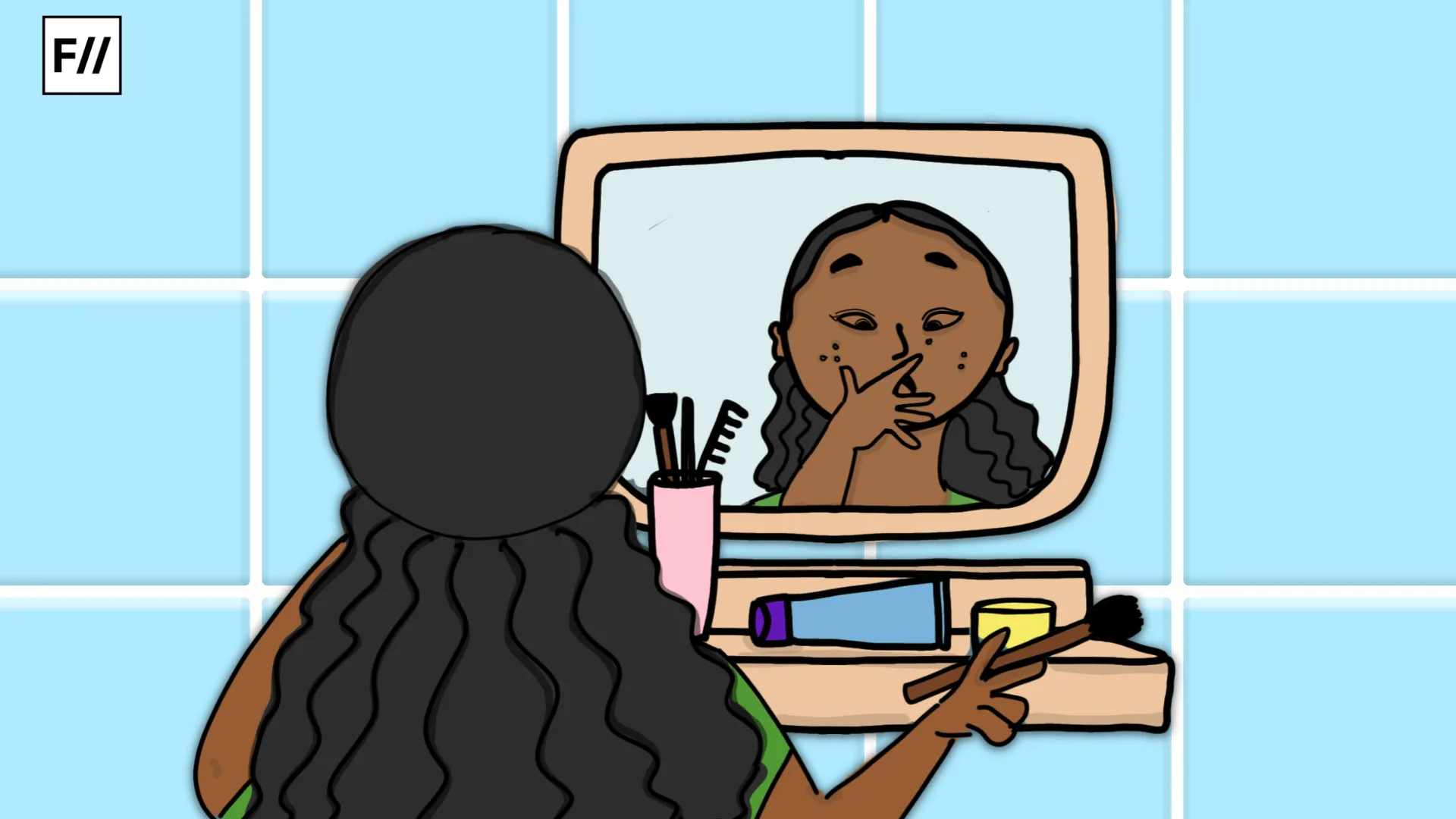
As a woman nearing her 30s, Instagram has made me second guess every choice I make. Questions I barely thought about a few years ago now feel urgent. Is my face asymmetrical? Is it sagging? Do I need retinol or retinal? Am I tired because of my lifestyle, or am I deficient in magnesium, omega-3, or something else I haven’t discovered yet?
These anxieties may feel personal, even trivial, but they are deeply political. In an economy where emotions are monetised and beauty is treated as a form of responsibility, women’s insecurities become profitable assets. This is where affective capitalism and promotional culture intersect. Our fears, desires, and self-doubts are not just reflected back to us but actively shaped and sold.
Social media platforms and beauty brands do not merely respond to women’s needs; they produce them. Through influencers, algorithms, and wellness marketing, femininity itself is increasingly tied to constant self-improvement. Looking good is no longer about aesthetics alone, but about discipline, productivity, and moral worth.
When capitalism meets emotions
The Indian skincare market is valued at $3 billion, while globally it stands at a staggering $446 billion as of 2023, and it is expected to grow 6 percent annually. Rapid urbanisation and rising middle-class incomes certainly play a role, but the hyper-awareness generated by Instagram influencers is arguably the real fuel behind the industry’s booming profits.

As a woman inching towards the “thrilling thirties,” catchy reels that ask, “Do you have fine lines, under-eye dark circles, and uneven skin tone?” Make me stop scrolling. The ingenious Instagram algorithm picks up on that, and bam, it is all I see from that moment onwards. Social media does not just know what we enjoy; it knows what we feel. Our likes, comments, searches, and insecurities become data points that translate emotions into profit. Every vulnerability becomes a marketing opportunity.
Social media platforms and beauty brands do not merely respond to women’s needs; they produce them. Through influencers, algorithms, and wellness marketing, femininity itself is increasingly tied to constant self-improvement.
This is how affective capitalism works. Emotions, desires, and insecurities become raw materials. Platforms do not just sell to us; they shape us into consumers who keep needing what they sell. We think we are in control, that we are choosing who to follow, what to like, and when to scroll. But the system quietly shapes those very choices. Even when I try to “train” my algorithm to show better content, it is still the algorithm that decides what “better” means. Targeted ads that appear right after a conversation with a friend or a late night search are not coincidences. They are reminders that my emotions, habits, and impulses are data that can be predicted, packaged, and monetised.
To make matters worse, this system does not affect all users equally. A former Meta employee and whistleblower, Sarah Wynn-Williams revealed how Instagram actively targeted teenage girls at their most vulnerable moments. Internal documents showed that when a teenage user deleted a selfie or removed a photo, often a sign of dissatisfaction with her appearance, the platform interpreted it as a signal of emotional vulnerability. Instagram reportedly used this data to push beauty and appearance-related advertisements. In doing so, moments of self-doubt were transformed into monetizable opportunities that exacerbated insecurity while generating profit.
If these targeted ads can affect adult women like me, who have some degree of emotional and self-image stability, the effect on teenage girls is deeply concerning. For young users still developing their sense of self, constant algorithmic scrutiny can quietly turn insecurity into a routine part of growing up.
Promotional culture
Affective capitalism would not be nearly as powerful without the machinery built to act on these emotions. That machinery is what scholars call promotional culture, the system through which emotional data becomes everyday consumer desire.
Promotional intermediaries like brands, marketers, influencers, and even wellness “experts” play a crucial role in this ecosystem. They do not just sell products; they mobilise their understanding of our emotions to shape what we want in the first place. They map desires like “confidence,” “youthfulness,” or “glow” onto objects and routines, turning emotions into features and insecurities into market categories.
Over time, these mediators inscribe meaning onto everything. A jade roller is no longer a simple tool; it becomes a promise of symmetry. A supplement is not just omega-3; it becomes “energy”, “focus”, or “youth.” In doing so, they make our anxieties before a meeting, our midnight scrolling, or our cultural obsession with looking “put-together” productive for global markets.

This ecosystem is further complicated by how common paid partnerships have become. Influencers are no longer simply sharing what they use; they are performing trust for a living. The line between genuine recommendation and sponsored persuasion is now so thin that it is almost impossible to know whether a product is actually effective or just part of a well orchestrated marketing script. When every other reel is tagged “collab,” “paid partnership,” or “PR package,” authenticity itself becomes a commodity, and we as consumers have no reliable way of knowing what truly works.
A fleeting worry about ageing suddenly becomes a curated market of serums, tools, routines, and “must-haves,” all promising to fix a problem I did not know I had until someone named it. Somewhere in this loop, my late-night doubts about my skin or fatigue stop feeling like personal concerns and start feeling like categories in a catalogue, neatly packaged and endlessly capitalised.
Influencers are no longer simply sharing what they use; they are performing trust for a living. The line between genuine recommendation and sponsored persuasion is now so thin that it is almost impossible to know whether a product is actually effective or just part of a well orchestrated marketing script.
This gendered targeting is not incidental. Beauty and wellness capitalism thrives on the idea that women must continuously invest in themselves to remain acceptable, desirable, or even competent. From skincare routines to supplements, women are encouraged to spend more buy more frequently, and emotionally invest in products that promise control over ageing, tiredness, and imperfection. The cost here is not only financial. It is also psychological. This is a softer version of the pink tax, where women pay not just more money, but more attention, more anxiety, and more emotional labour in the name of self-care.
At some point, I realised that the anxiety is not coming from my skin or my sleep cycle; it is coming from a system that wants me to believe I am always one purchase away from becoming the “best version” of myself. Instagram may not have created my insecurities, but it has definitely organised and neatly colour-coded them for easy targeting. Now, before I add something to my cart, I try to pause and ask myself whether I truly need it or whether an influencer with perfect lighting has convinced me that I do.
Maybe entering my thirties is not about lifting my face or tightening my pores, but about lifting the pressure to constantly fix myself. The most radical self-care I can practise is closing the app before it tells me happiness comes in a 30 ml bottle, is dermatologist-approved, is influencer-tested, and is somehow still my fault if it doesn’t work.



Love the article. Resonates!
I am a 29 year old man and this article does not only relate to women.Love the authors thought on how instagram targets, influence, and play on the psyche of common people. For their montary gain, influencers not only sell commodities which they do not believe in but also deliberately create a demand by making the viewer feel that if they are not doing “xyz thing” , they are in the wrong.