India’s Total Fertility Rate (TFR) has declined to 2.0 as per NFHS-5 data, and family planning programmes have expanded access to contraceptive information and services. Most women today can identify methods such as pills, condoms, injections, and Copper-Ts. But there is a significant gap between awareness of these methods and their usage. Contraceptive knowledge in India is near-universal, 99 per cent among currently married women and men between the ages of 15 and 49, according to NFHS-5 data. Yet the same data reveals that one in three married women still do not use any methods of contraception.
While most participants recognised modern contraceptive methods, 64 per cent believed they cause harmful side effects, and 66 per cent believed regular use could create medical issues during future pregnancies.
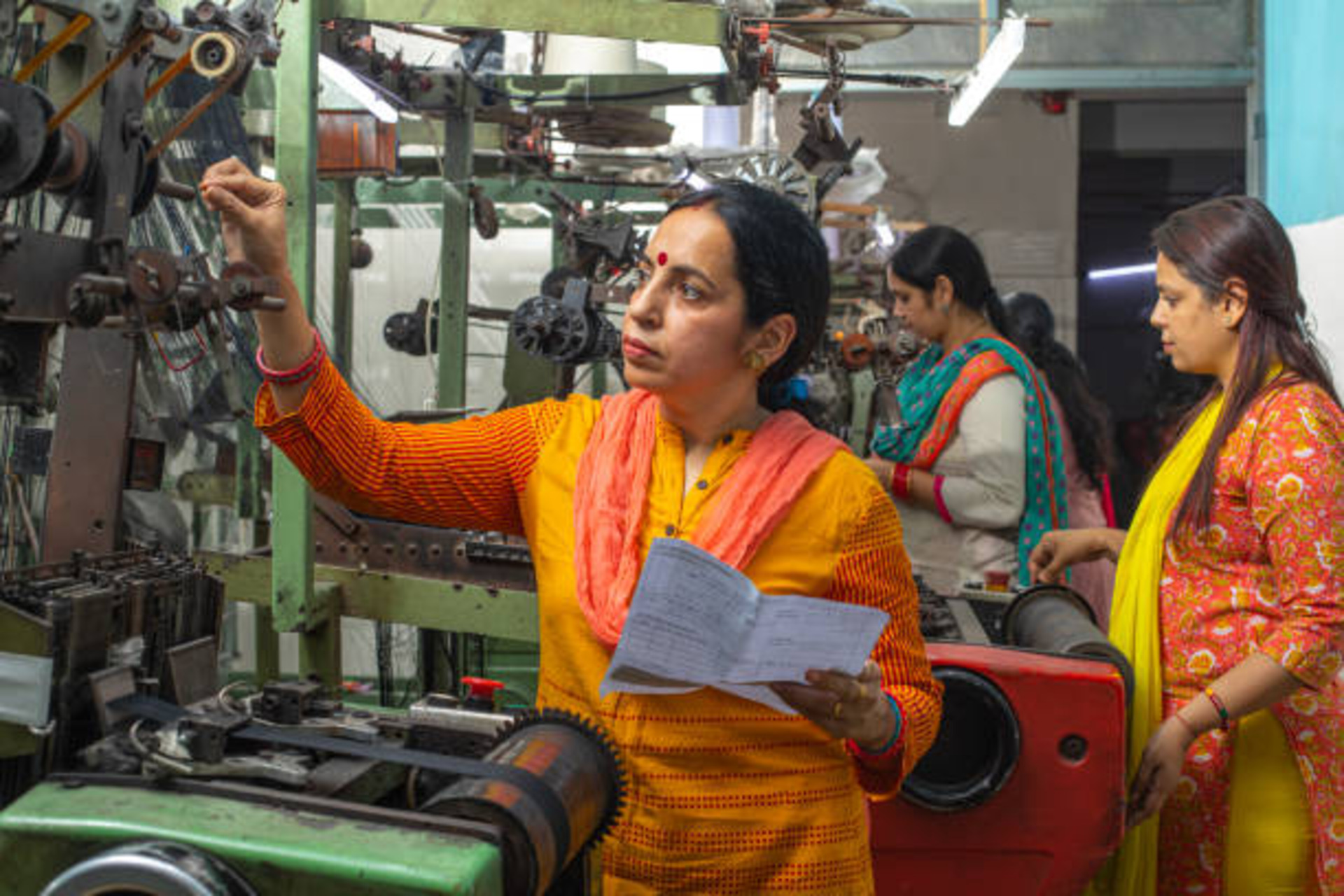
To understand this gap, Good Business Lab spoke with over a hundred migrant women workers at a garment factory in June 2024. While most participants recognised modern contraceptive methods, 64 per cent believed they cause harmful side effects, and 66 per cent believed regular use could create medical issues during future pregnancies.
One participant explained, ‘The doctor had told me that using injections as a contraceptive method frequently could result in women not being able to conceive in the future. They told me it’s okay if the injection is taken only once.’ The issue is not one of lack of awareness, but it has to do with acceptance and fear regarding contraceptive use. This arises due to uncertainty and what women have heard about contraceptive use within their communities.
What do women fear?
During survey discussions, women described specific concerns. Some believed frequent condom use could cause damage to the genitalia. One worker said, ‘Frequent use of condoms can cause problems for both the penis and vagina.’ Another shared a relative’s story about Copper-T insertion: ‘My sister-in-law told me that after inserting Copper-T, blood appeared during intercourse.’
In most households, fertility carries significant social value, and even small doubts about infertility influence decisions.
These claims lack medical rationale, yet they circulate through families, peers, and sometimes through incomplete or overly cautious advice from healthcare providers. In most households, fertility carries significant social value, and even small doubts about infertility influence decisions. Because of these beliefs, some women wait to use contraception until they have finished having children, even if they need it for their health. They may avoid contraception even when it could help them space pregnancies, delay pregnancies for important reasons, and protect their health.
The same pattern appears in pregnancy care as well. Workers said that women in their villages often delay antenatal visits. One worker said, ‘In my village, pregnant women go to a doctor only during their fifth or seventh month of pregnancy.’ Another added, ‘People say that one should see a doctor only after three months.’
Several women also expressed distrust toward hospitals. One participant shared that she delivered most of her children at home because she was afraid of institutional care, citing long discharge times and lack of support. These stories show that women hesitate to use contraception or seek adequate maternal care because their personal experiences, advice from community members, and social expectations influence how they interpret modern medical practices alongside long-standing community beliefs.
Menstrual stigma as the foundation for low contraception use
Contraceptive fears build on flawed beliefs about the body. In many of the communities that the workers surveyed belong to, menstruation carries a lot of restrictions. Women may avoid kitchens or temples, sleep separately, or limit routine activities during their periods. In the survey, 72 per cent viewed menstrual blood as impure.
These restrictions rarely have any explanation; they are simply observed, generation after generation and are carried forward without being questioned. When menstruation is treated as taboo, as something that should not be talked about, the same treatment extends to later stages of the reproductive cycle, like contraception and prenatal care.
Menstrual taboos have been found to directly limit women’s knowledge and autonomy around contraception, pregnancy, and safe abortion, with stigma absorbed in girlhood shown to shape reproductive health outcomes well into adulthood.
Menstrual taboos have been found to directly limit women’s knowledge and autonomy around contraception, pregnancy, and safe abortion, with stigma absorbed in girlhood shown to shape reproductive health outcomes well into adulthood.
The Supreme Court recently directed the National Council of Educational Research and Training (NCERT) and the State Council of Educational Research and Training (SCERT) to integrate menstrual health into curricula through gender-responsive content. This move aligns menstrual dignity with the rights protected under Article 21A, linking it to dignity, equality, health, and access to education.
Although the judgment focuses on adolescent girls, it also highlights a broader point: reproductive health is directly linked to dignity and participation, and early taboos can influence future decisions. The judgment noted that ‘lack of body literacy contributes to a feeling of lack of bodily autonomy.’
The workplace as a safe space
If silence leads to fear, this raises an important question: where can people have open conversations? For many migrant women, the workplace may be one of the few structured environments outside the home where open dialogue is possible. As part of the study, Good Business Lab partnered with Project Baala, an organisation specialising in sexual and reproductive health, to create and test a training program designed for low-income migrant women workers.
Women met in small groups for regular, guided discussions over weeks. This gave them a safe and supportive place to talk about various topics, such as pregnancy, menstruation, domestic violence, sexual harassment, and more. Women spoke with peers who shared similar migration backgrounds and family pressures. For many, this marked the first time they discussed these subjects openly.
One participant reflected, ‘I feel like I have gained courage within.’ Women compared experiences, clarified misconceptions, and questioned long-held beliefs. Earning wages also strengthened their confidence in household discussions. At work, they found a space where they could talk openly, relate to each other’s concerns, and not feel judged while discussing them.
Knowledge gains following SRH training
Workers who received SRH training reported:
65.3% higher overall SRH knowledge than the control group
114% higher menstruation-related knowledge, the largest observed gain
82% higher pregnancy-related knowledge
62% higher knowledge of contraception and STD prevention
33% higher knowledge related to violence and harassment
These results show that having conversations helps people understand sexual and reproductive health better. Talking with others who have had similar experiences also offers important support.
Menstrual health as part of the right to life
The Supreme Court’s directions on menstrual health reflect that the onus of supporting menstrual health and dignity should not rest solely on women; the system must create supportive conditions and design spaces that help women. By mandating gender-responsive curricula and institutional accountability, the judgment places responsibility on systems rather than individuals.
If menstrual health is essential for participating in education, it is equally important for joining the workforce. However, legal rights by themselves are not enough to change outcomes unless women have environments that support informed choices.
The path to agency
There is a big gap between what women know about SRH and the agency they have when it comes to these issues. Myths about contraception and worries about pregnancy often mix with what they have learnt about pregnancy through their surroundings. This gap affects their health and their ability to plan families while managing work.
To truly strengthen women’s agency, women will need both knowledge about SRH and supportive environments that help them feel confident and allow them to discuss their concerns openly.
Public health campaigns have helped raise awareness, but information alone does not change behaviour. Cultural taboos make it hard to ask questions; the lack of open acceptance and discussions renders these topics off-limits. Short medical consultations cannot undo years of caution passed down through generations.
To truly strengthen women’s agency, women will need both knowledge about SRH and supportive environments that help them feel confident and allow them to discuss their concerns openly. Otherwise, silence and old habits will continue to influence how they make decisions about reproduction.
All quotes in this article are the authors’ free translation into English.
This piece is based on a study conducted by Good Business Lab with 100+ migrant women working in a garment factory. It examines why contraceptive fear and menstrual stigma continue to influence decisions even when awareness has increased, and how the workplace can become an unexpectedly effective space for change.
About the author(s)

Sangeetha Esther is a Senior Research Associate at Good Business Lab, a not-for-profit research organisation that tests solutions to improve worker wellbeing and business outcomes in labour-intensive industries.
Murchana Nath is a Senior Research Associate at Good Business Lab, a not-for-profit research organisation that tests solutions to improve worker wellbeing and business outcomes in labour-intensive industries.