In May 2022, a three-judge bench of the Supreme Court of India ruled in Budhadev Karmaskar v. State of West Bengal that sex workers are “entitled to dignity and equal protection under the law.” The court instructed police not to arrest sex workers during brothel raids. It also ordered that no child be separated from a sex-working mother just because of her profession. Authorities were directed to issue Aadhaar cards, voter IDs, and ration cards to sex workers who had not been able to access them due to a lack of documentation.
However, the ruling could not change India’s welfare system. Four years later, the gap between the dignity the court recognised and the protections the state provides is still vast. The court identified the problem but could not create the necessary infrastructure to address it. This infrastructure, which includes pensions, health coverage, occupational safety, and legal recognition as workers, has always required legislative action. Unfortunately, it has not materialised.
A Legal Status That Was Never as Clear as It Sounds
It is often inaccurately reported, even in sympathetic feminist commentary, that the 2022 ruling decriminalized sex work in India. This is wrong because there was nothing to decriminalise; voluntary sex work between consenting adults has never been illegal under Indian law. What is illegal is almost everything that allows this work to be done safely, i.e., running a brothel, soliciting in public, living off another person’s earnings, and other acts defined as crimes under the Immoral Traffic (Prevention) Act, 1956. Prabha Kotiswaran, a professor of law and social justice at King’s College London, has noted that sex workers often face penalties under the ITPA for ordinary daily activities, for example, dropping a child at school or just being in a place where police suspect sex work occurs. In 2011, a judicial panel recommended legislative reforms; the Centre told the court in 2016 that a draft bill incorporating those recommendations was in progress. Nearly a decade later, this bill still has not passed.
How Many Women Are We Talking About
Reliable population figures for sex work in India are hard to establish. Any number provided should be seen as an estimate rather than a confirmed fact, reflecting how poorly the state has counted a population it has chosen not to protect. The National AIDS Control Organisation’s 2004 mapping exercise, one of the most serious efforts at estimation, suggested there were between 0.8 and 1.25 million female sex workers nationwide in the year 2004. Other commonly referenced figures for the total sex work population, which includes male and transgender sex workers while considering undercounting in a hidden occupation, may reach as high as 3 million. These estimates can differ significantly based on the method used, but even the most conservative figures indicate that hundreds of thousands are involved in this profession, larger than the membership of several recognised trade unions, yet without any corresponding institutional support.
As Meena Seshu, founder of SANGRAM, has observed across decades of organising: “The one thing I’ve always believed in is that we don’t listen to women enough, even in the feminist movement.”
Where the Welfare System Simply Has No Box to Check
Because the conditions surrounding sex work remain criminalised, the state’s registration systems offer no formal category to recognise it as a legitimate livelihood. A worker cannot register an occupation that the law deems connected to criminal activity, even if the act itself is legal. This contradiction runs through the 2022 ruling as well.
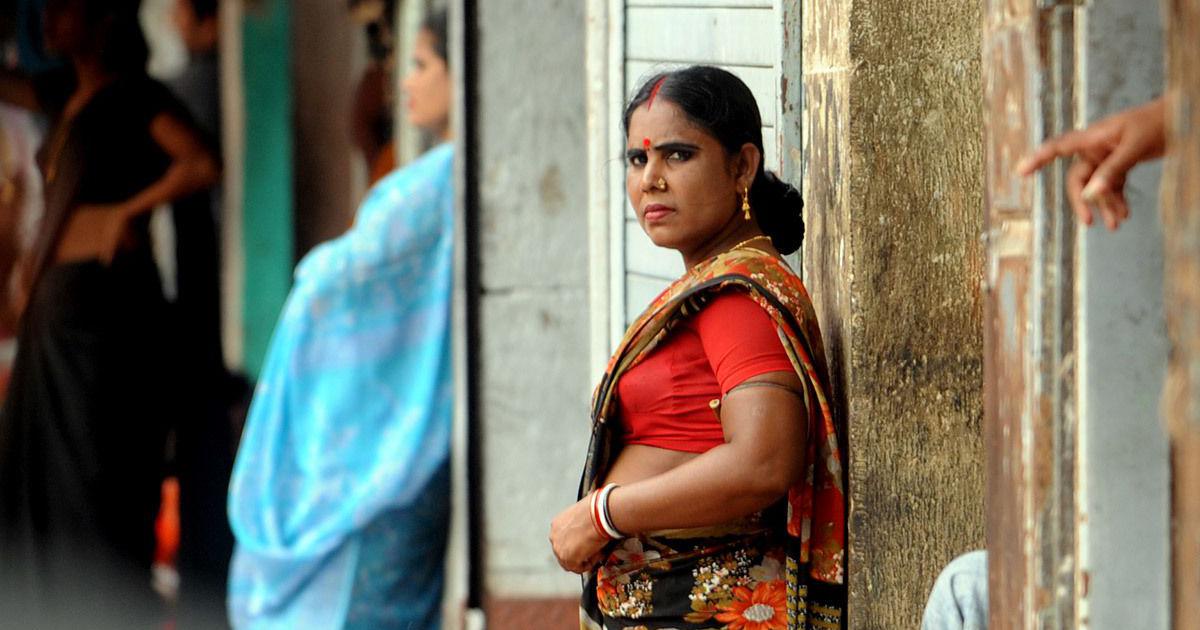
The practical consequences of this gap are serious and well-documented by the collectives that have sought to address it for decades. Organisations like the Durbar Mahila Samanwaya Committee in Kolkata and VAMP — Veshya Anyay Mukti Parishad — in Sangli, Maharashtra, a collective of around five thousand women in sex work that has operated since the 1990s, have spent years documenting high levels of violence in the profession, lobbying police for basic safety, and advocating for access to government health systems that routinely turn away sex workers. However, none of these grassroots efforts has secured what they truly need, as that would require legislative change, not just administrative adjustments. They still lack access to pensions, appropriate occupational health insurance, maternity benefits, or any formal mechanism for compensation if a worker is injured on the job. Smarajit Jana, founder of the Durbar Mahila Samanwaya Committee, which represents over 65,000 sex workers in West Bengal, has articulated what this exclusion means in practice: “If they are not defined as workers, it is a failure to recognise the work they do to earn their livelihood and feed their families. They will not be recognised as full-fledged citizens of the country, having full access to various citizenship documents and the right to social and development schemes.” Mumtaz, a Mumbai-based sex worker who spoke to the Thomson Reuters Foundation during the pandemic, when work had dried up entirely, and welfare schemes had largely failed to reach sex workers, put the practical consequence directly: “I need work, not aid.”
India’s institutional response to sex work, reflected in government programs like Ujjawala, focuses on rescue and rehabilitation. This approach views sex workers as victims needing to leave their profession instead of as workers who require regulation and protection. This perspective has serious implications for women who do not wish to be rescued. A survey by the Sarvojana Coalition found that most women sex workers entered the profession by choice, albeit within constrained economic circumstances — a familiar tension in discussions about labour and consent in poverty. A solely ‘rescue’ framework lacks the language to address this issue. Seshu has captured this tension directly: “In VAMP we have a slogan: ‘save us from saviours’. These saviours are saving us for themselves; they’re not saving us for ourselves. If they had come to save us for ourselves, maybe they’d help us get better working conditions; they wouldn’t use the most oppressive arm of the State, the police, to ‘help us’.” The Karnataka Sex Workers Union aims to position itself within India’s broader labour movement rather than in the anti-trafficking movement. They argue that the absence of a fixed employer and the informal nature of work arrangements in sex work are not unusual conditions; they actually reflect a larger trend in the Indian labour market, where the majority of workers operate informally and without protection.
What Decriminalisation Elsewhere Actually Looks Like
Australia is sometimes seen as a single decriminalised model, but the reality is much more complicated. New South Wales became the first place in the world to fully decriminalise adult sex work, a process that began in 1979 and was largely finished by 1995, treating sex work premises like regular businesses regulated by local councils under standard commercial and planning laws. New Zealand followed with full national decriminalisation in 2003. In contrast, South Australia, Western Australia, and Tasmania still retain full or partial criminalisation; only certain states achieved what NSW and New Zealand did decades ago, while others remain closer to India’s current situation.
Research from NSW and New Zealand, covering over fifty studies conducted through 2022, found strong evidence supporting full decriminalisation as the best model for protecting sex worker health and safety. India’s framework offers none of this, because the activities surrounding sex work have never been normalised under regular law, as NSW achieved nearly half a century ago.
Beyond the Debate, A Question of Rights
Any honest discussion of this issue must acknowledge that feminist politics in India and globally is genuinely divided over sex work. Some view it as labour needing regulation and rights, while others see the sex trade as inherently exploitative, believing no amount of regulation can fix it. This disagreement will not be settled by a single article, and a publication committed to feminist analysis should be honest with its readers about this division rather than pretending it doesn’t exist.
However, the welfare gap highlighted in this piece is, in a crucial sense, separate from that disagreement. Regardless of one’s views on the ethics of sex work, the roughly one to three million people currently engaged in it in India today are not hypothetical. They are real individuals, often raising children, and they are completely outside the scope of any social protection that the Indian state has developed for workers over the past decade. The Supreme Court has already ruled that sex workers are entitled to dignity and equal protection under the law. However, it requires the Parliament to address a draft bill that has been pending for a decade.