During the early college years, I suffered from temporary hearing loss. This was a period that altered my understanding of silence, perception, and resilience. The disability was temporary, but its impact on me was permanent. My medical condition became a social experience and changed my views on disability completely. How easily we use phrases like “Are you deaf?” or “Are you blind?” without understanding how hurtful or insensitive it would be for the people actually going through some sort of disability. One of the most painful experiences I have encountered was when two girls from my college called me out publicly for my hearing limitation, and that’s when I decided I would never open up about my situation to anyone.
Every day of life became a struggle, and I was in law school. A place that should be more accessible than anywhere else. Looking back at those days made me realise I never needed sympathy; I wanted people to behave normally around me. To not remind me of my disability. I got into the college on merit after clearing CLAT, after competing with people who were physically more capable than me but after entering the college, I felt that people saw my condition before my competence. The professors used to sympathise with me, classmates started taking my silence as ignorance, and opportunities started slipping away. It was not all because I lacked ability but because the world around me doubted it.
My medical condition became a social experience and changed my views on disability completely. How easily we use phrases like “Are you deaf?” or “Are you blind?” without understanding how hurtful or insensitive it would be for the people actually going through some sort of disability.
It took me four years to get a medical cure for my disability, but the social scare continues to scare me. What was more painful was realising that disability in India is not seen as a condition; instead, it is taken as a character flaw. The condition of women is worse; they already have fewer opportunities, which also get slipped because of their limited sensory or physical condition.
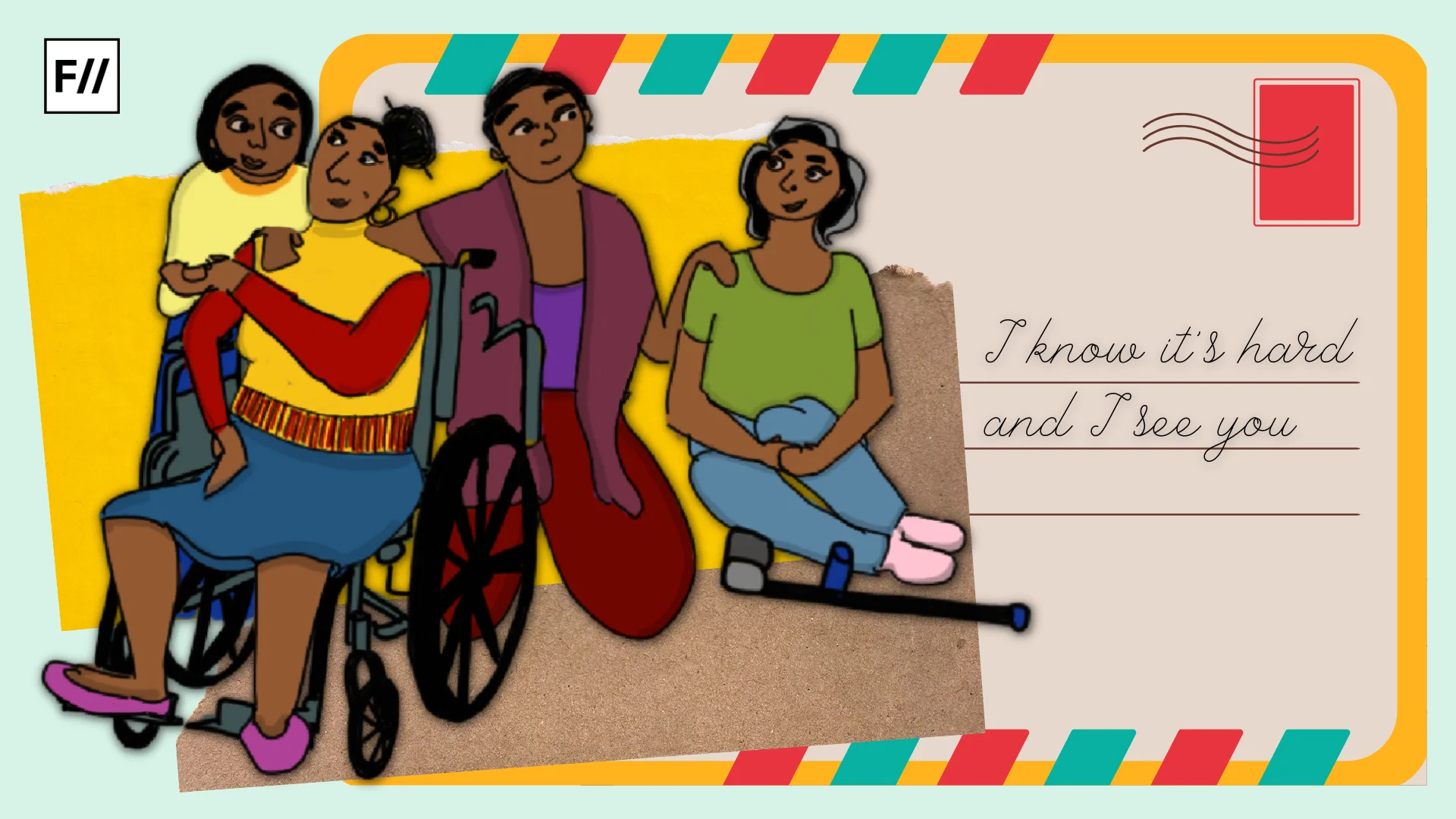
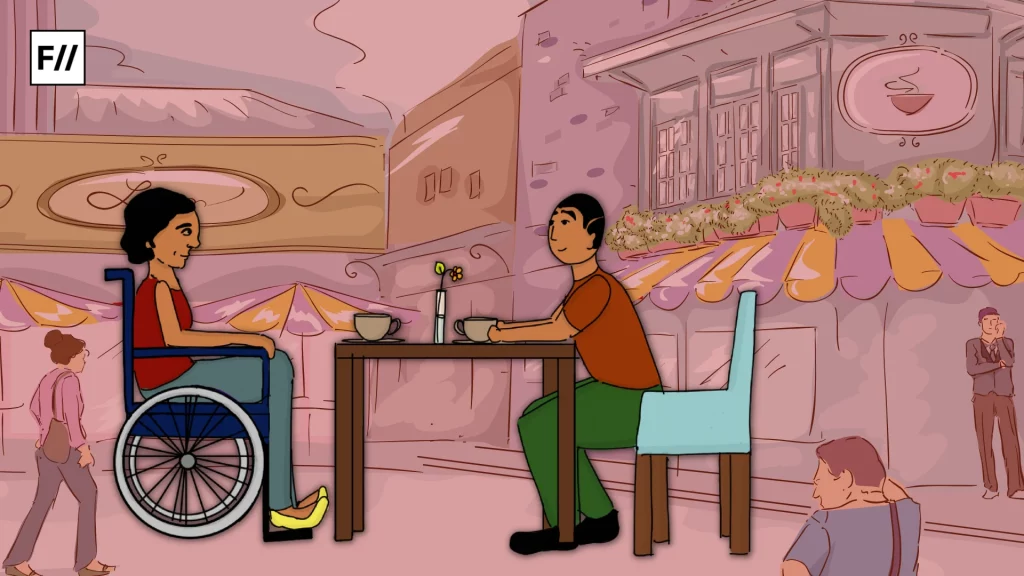
I feel that I was still privileged because I got to continue my education and live life as I wanted. Throughout my college life, I met different people with different limitations. I had a senior, Ananya Kumar, who had a locomotive limitation affecting much of her mobility. The college failed to provide her with the right infrastructure that could give her the much-needed independence. Even after all this, she chose to show up. She says, “I know that we only live once and I cannot waste that life away because the world could not match its pace with me in terms of accessibility.” Women with any kind of disability, whether visible or something as invisible as hearing loss, remain largely under-represented. The debate of ableism and patriarchy goes hand in hand and further complicates the system.
Experience as a disabled woman: The double layer of disability
The women with disabilities face a double layer of exclusion; they are not excluded from mainstream, they are invisibilised. According to the 2011 census, India has over 11.8 million women with disabilities, but they are not adequately represented in higher education. The poor college infrastructure and social stigma associated with disability further extend the exclusion.
A study by the National Centre for Promotion of Employment for Disabled People (NCPEDP) found that women with disabilities face three times the level of unemployment compared to men with disabilities. The Right of Persons with Disabilities Act, 2016, and UNCRPD provide a strong legal framework to give equal treatment to people with disabilities. While accessibility provisions exist on paper, the educational institutions rarely implement them. Facilities such as audiobooks, visually impaired labs, ramps, and elevators are also absent from Tier 1 institutes. The reality is different from what these papers claim. The Indian legislation is heavily reliant on the UN Convention on the Rights of Persons with Disabilities (UNCRPD), to which India is a signatory. However, the law and lived reality are different. Moreover, legally, women with disabilities are less credible witnesses, which further extends the exclusion they face. In a country where disability is seen as a question of one’s intellect, seeking sensitivity is a far cry.
As Nidhi Goyal, founder of Rising Flame, a feminist disability rights organisation, explains, “We can’t have non-disabled people representing the disabled community because we believe in the concept of ‘Nothing about us, without us.’”
The National Policy for Persons with Disabilities (2006) and subsequent legal reforms mention “special care” for women with disabilities, but without any implementation mechanisms, these remain symbolic gestures. The problem lies in the absence of societal accountability, not the law.
Legal analysis: from rights to realisation
The Rights of Persons with Disabilities Act, 2016 (RPwD Act), though it provides for an expansive framework, theimplementation isstill far from transformative. Section 3 of the act clearly mandates equality, non-discrimination, and full participation in society, while Section 16 provides for inclusion in mainstream education. The absence of gender-specific data and an enforcement mechanism is limiting the real impact. The Constitution under Articles 14, 15, and 21 collectively affirms equality, non-discrimination, and the right to live with dignity.
The apex court in Vikash Kumar v. UPSC (2021) held that reasonable accommodation is not a privilege but rather a constitutional right stemming from Article 14. However, in reality, even the premier educational institutions treat it as an optional compliance rather than a legal mandate. The intersection of the gender gap and disability needs recognition in the statutory interpretation. This will save the disabled women from double marginalisation. The UN Convention on the Rights of Persons with Disabilities (UNCRPD), under its Articles 6 and 9, mandates not only accessibility but also empowerment and gender equality, yet these obligations are rarely transformed into policy action.
Disability: towards an inclusive future
When I look back at those years of hearing loss, I realise that silence taught me more than what sound can ever do. As India is shifting to a more inclusive form of society, there is a need for a shift in consciousness where disability is not taken as weakness but as diversity. Women with disabilities are not demanding sympathy; they want recognition and space and equality. To ensure targeted policy intervention, government must establish gender-disaggregated data. The demand for fundamental rights and dignity is not new, but with the time dimension changing, we need to change our definitions of inclusivity as well. Efforts are being made by gender advocates, policymakers, and human rights organisations, but collective efforts are the need of the hour. Moreover, we need a society sensitive enough to understand that if it were in the hands of the person, nobody would have chosen to be disabled in the first place. We as a society need to change our mindset.
About the author(s)

Akshara Rajratnam is a writer, lawyer, and editor who lives at the crossroads of gender, global politics, and technology. She loves turning complex ideas into clear stories that spark conversations and shift perspectives.