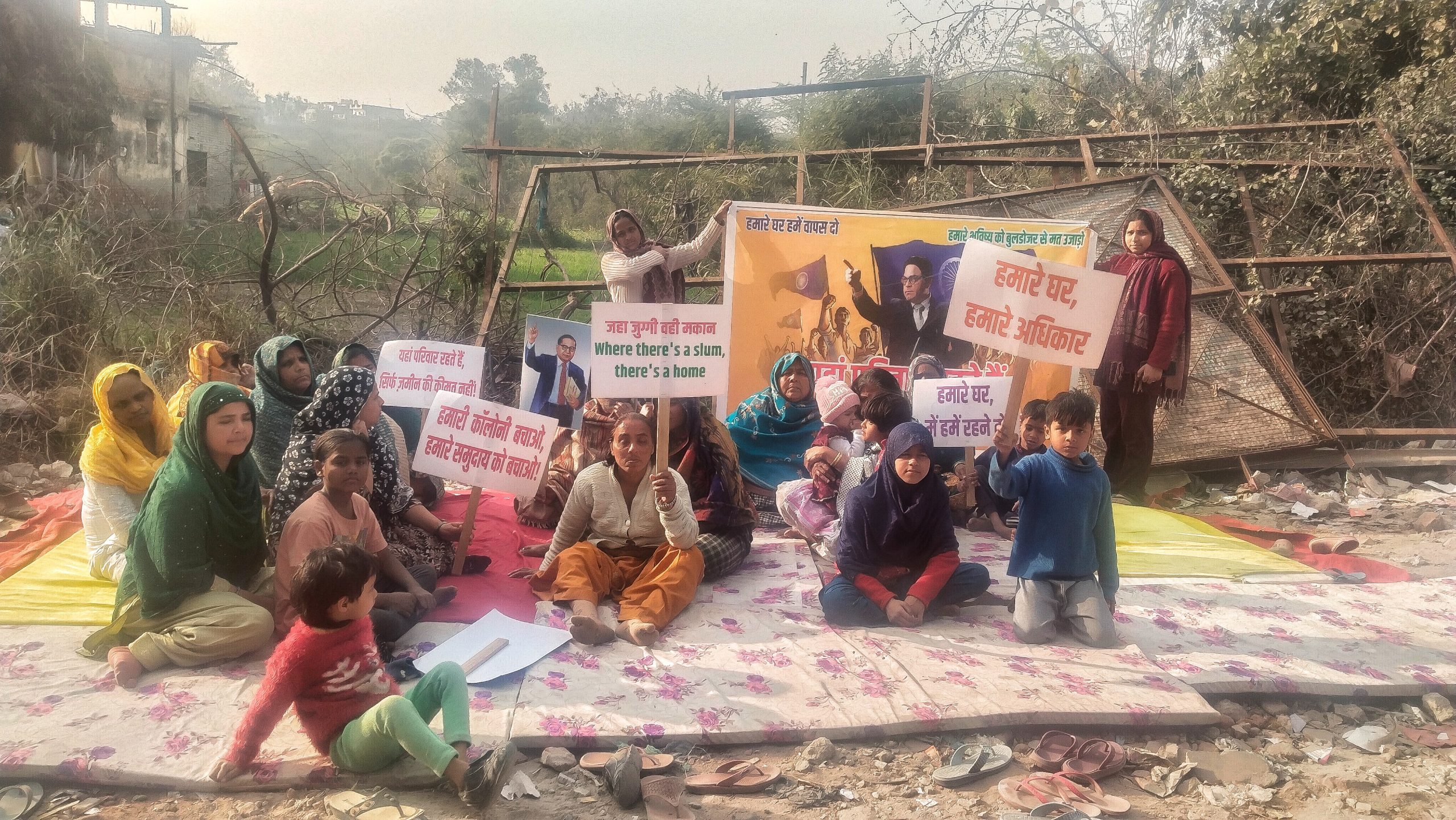
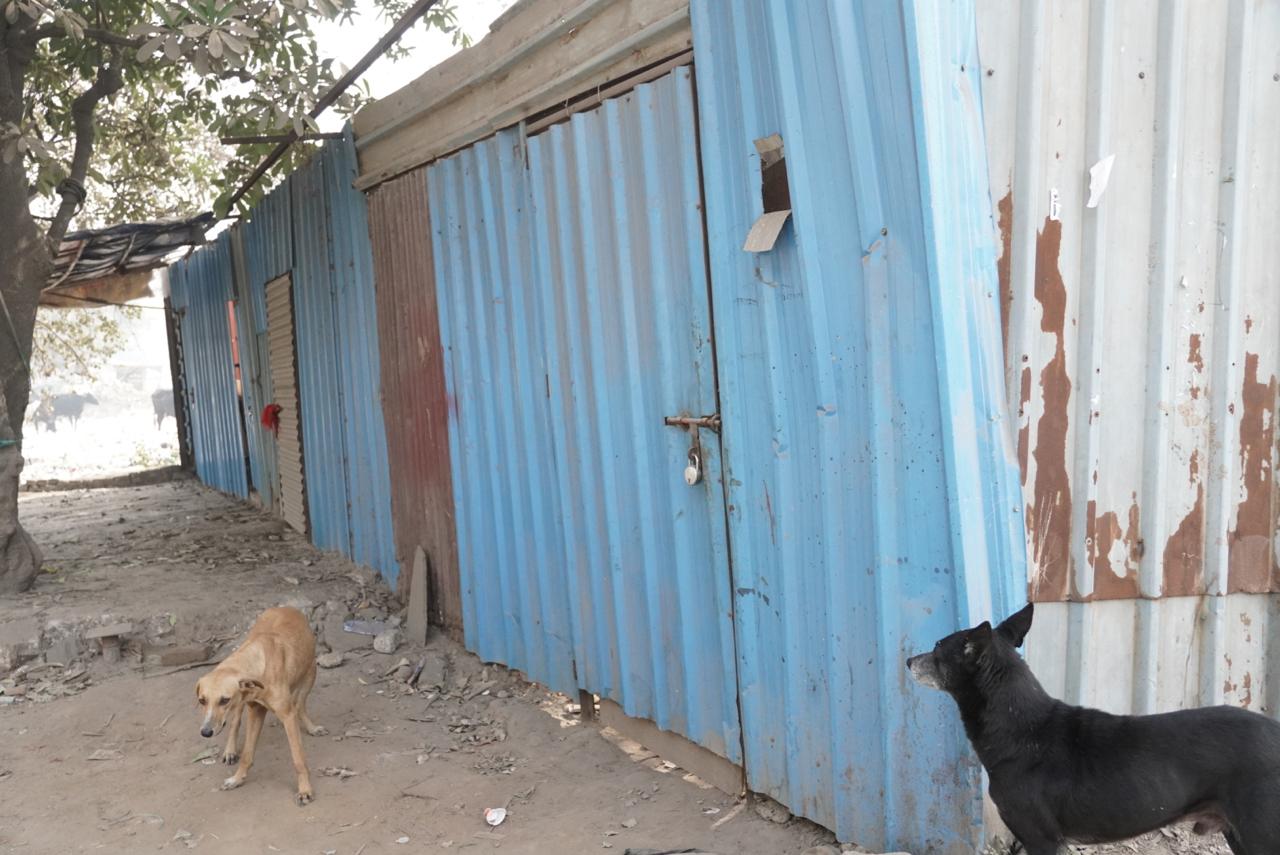
Women led protests in Aali Gaon, in Delhi’s Okhla became intense after bulldozers targeted multiple properties in the Masjid colony. On January 15, women activists staged demonstrations with bold slogans followed by candle marches to demand justice and accountability for demolition drives. Stemming from a land controversy of 8.5 acres between the residents and the UP irrigation department, the matter unfolded in mid-December when more than 300 homes were sealed without any prior notice. Families were pushed to vacate amid the chilling season despite having documentation- forcing them to live in makeshift canopies beside the faded walls of the Muslim dominated area.
Residents have constantly been active at the forefront of the protest zone since December. Raising placards that say, ‘Save Our Colony, Save Our Community‘, ‘Don’t Demolish Our Futures With Bulldozer‘, and ‘These Are Families, It’s Not Just About The Land‘, women shared their woes with Feminism in India.
Ameerjahan, (29) an insider, explained the situation: ‘We have been living in the locality for more than 5-6 generations. The administrative action was abrupt and we were not given adequate time to pack the essential and important things like food, uniforms, and blankets. Now the bulldozer drives have worsened our condition.’
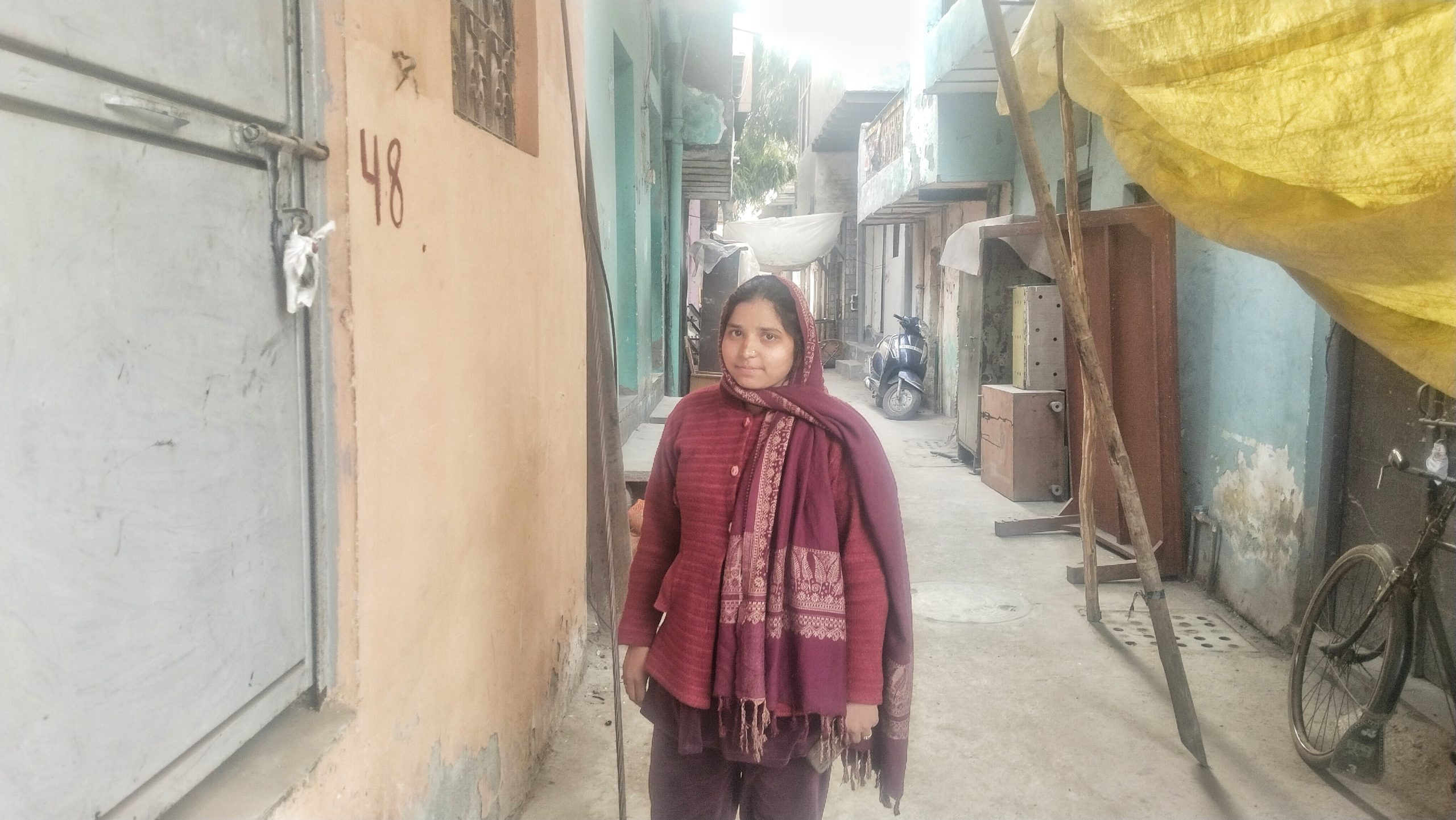
Relying on the grassroot NGOs and humanitarian aid from Jamat-e-Islami Hind, the everyday lives of the targeted population of Aali Gaon has become a mammoth challenge- affecting women, men, and children.
Roohi* (36) who delivered a girl child just 15 days ago is struggling for basic necessities like nutritious food, sanitation, and a hygienic corner to rest. ‘I don’t have words to explain my worries. I am anxious about the wellbeing of my child. Living under the open sky with a 15 days old child during the freezing winters is too risky to cope with.’, she says.
The Aali gaon land dispute has become a tense topic concerning the Delhi authorities, UP government, and local residents, going back to a 150-year old controversy. As an unplanned settlement of Southeast Delhi, the area consists of a significant Muslim and Dalit population. The matter was highlighted in 2010 when the Delhi high court ordered DDA (Delhi Development Authority) to prepare an authorised map for several villages and towns. Although many residential colonies had previously received official certification from MCD, the structures are claimed to be built on illegally encroached land due to the lack of approved digraphs. Most of the houses in Aali Gaon were constructed on the land purchased decades back through the “power of attorney” without registry, pointing towards the role of corruption and middlemen. The first notices were handed out in 2018, since then the lawsuit is under critical judicial proceedings.
Women activists like Ameerajahan, Sultana, Nasreen, and Shabana said that men remain busy in conducting meetings with the irrigation department to sort out the tussles and collaborate with NGOs; meanwhile women have become the soul of ongoing protests.
Women activists like Ameerajahan, Sultana, Nasreen, and Shabana said that men remain busy in conducting meetings with the irrigation department to sort out the tussles and collaborate with NGOs; meanwhile women have become the soul of ongoing protests.
Sultana, (40) an activist at the site, said that the arbitrary orders are an attack on the right to life and privacy. ‘We have electric bills, gas bills, ration cards, Aadhar cards, voter IDs, and the other mandatory documents. Who gave them the right to seal or demolish our homes? Every election, leaders come with big promises, but nothing happens.’, she said.
Lives shattered, livelihood destroyed
The sudden backlash has deeply disturbed the workflow and livelihood of marginalised communities.
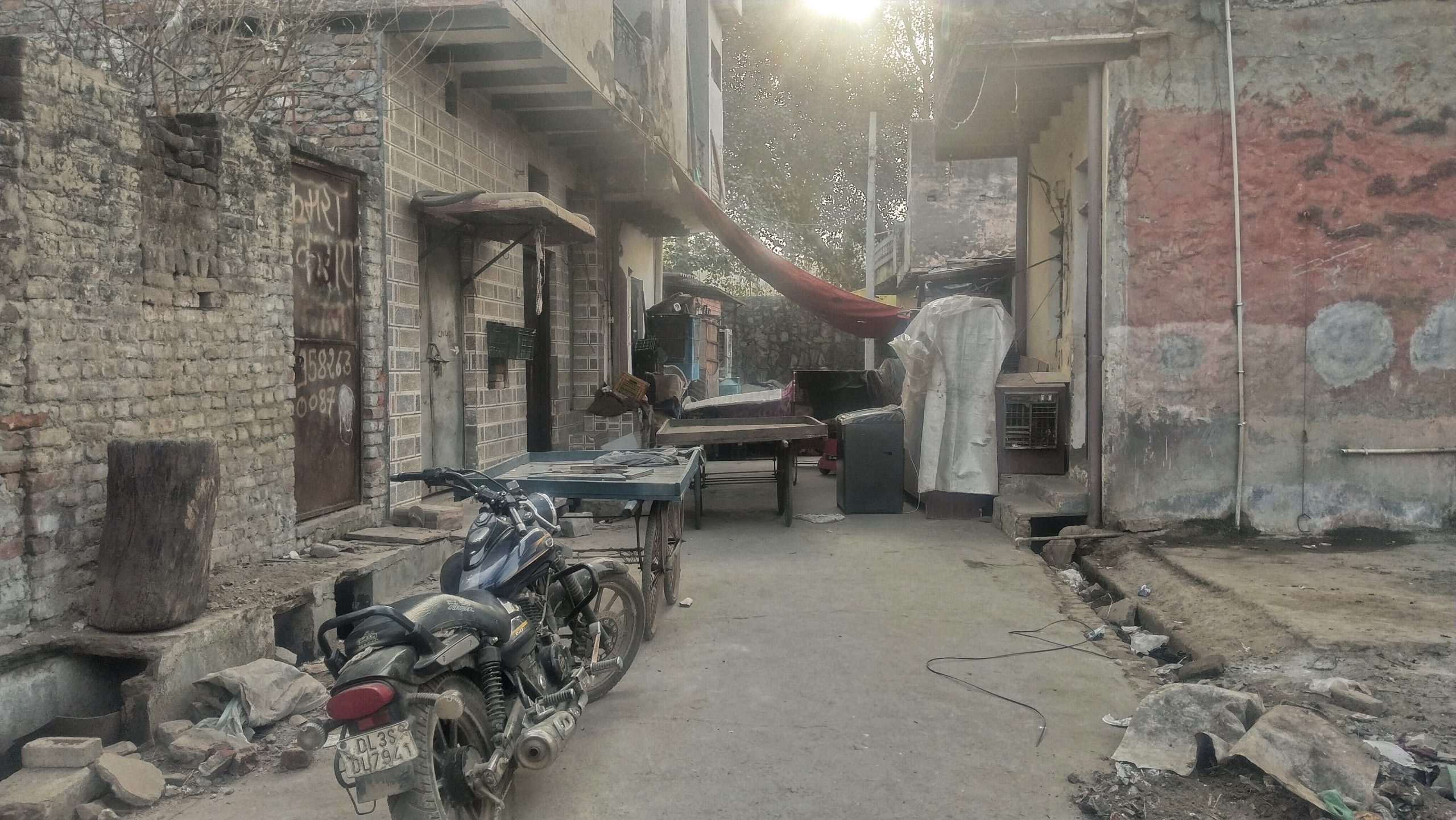
Bahadur Khan, (70) the owner of 7 shops in the front row of the colony recounted the consequences. He said that after the combined raid of 3 police stations and BSF troops, there is an atmosphere of fear and insecurity. The one month shutdown has devastated the local businesses and daily wagers who now find it difficult working hard like before.
‘I rented the properties to many people. There was a welding shop, a tea-cigarette stall, and one little blanket shop. Neither the landlords nor the tenants, no one knows how to deal with the pressing tensions‘, he said to FII.
Highschool student Rabiya (16) complained that board exams preparations have become precarious while living under shattered sunshades and awnings. ‘Study demands peace of mind and concentration. My friends and I, who would appear for the boards, are struggling to find a calm corner to study. Our rooms are locked, we don’t have access to the toilet or kitchen.’, she says.
Politics and communalism
Communal politics and the public have reacted differently to the situation. While the targeted victims received no direct external support from the mainstream leaders, the common people always stood by the oppressed.
While the targeted victims received no direct external support from the mainstream leaders, the common people always stood by the oppressed.
Amanatullah Khan, the MLA from Okhla constituency argued that the Delhi government has maintained proper drainage systems, electricity, and provided clean water amenities to Aali Gaon residents. However he remained silent on the question of bulldozer action.
Mohmmad Shahrukh (32) said, ‘We are almost the 5th generation in Aali Gaon. Until the 4th generation, we were not required to showcase paper work. It’s not just about the 300 homes- it’s a matter of more than 4000 homes spread across acres, affecting the lives of thousands. The government can’t claim ownership because our ancestors purchased the land from landlords on lease.’
The authorised inhumane response without an ultimatum has shaken the victims grappling with psychological loss and socio-political humiliation of communal politics. The residents want a stay on court-order and compensation for the loss. They also highlight the role of religious hatred behind the violation of human rights.
‘Things have changed with the rise of BJP in Delhi, making it easy to align with the Yogi government to target the religious minorities and marginalised communities across Delhi‘, Shahrukh added.
The Imam of the nearby mosque Zainul Abedin said ‘They also threw away the Janaza carrier from the courtyard of the mosque. We were asked to find a new carrier in case someone dies in the winter. Authoritarian orders are one thing, but it’s not expected from anyone to forget the fundamental concepts of humanity. Hate against any community is bad for the dynamic growth of a society.’
Social justice activists have been calling for rehabilitation plans while pointing fingers at the irrigation department.
Social justice activists have been calling for rehabilitation plans while pointing fingers at the irrigation department. The vital slogans keep them alive as posters glitter at the walls to revive new hopes.
A poster reads, ‘If the land actually belonged to the irrigation department, what were they doing from the past 70-80 years? This home is the future of our children. It’s the total outcome of our lives. Authorities must think about a proper rehabilitation plan before any harmful action.’
About the author(s)

Mariyam (she/her) has a thirst for significant stories that consist of humanitarian and feminist themes. She comes from Journalism, English Literature, and Political Science academic background.
For her, words are a visionary sovereignty to stand on and find the meaning of being while journalism is the only place where truth comes with facts and data. She also likes documentary photography, Rumi's spirituality, dreaming, and stargazing.