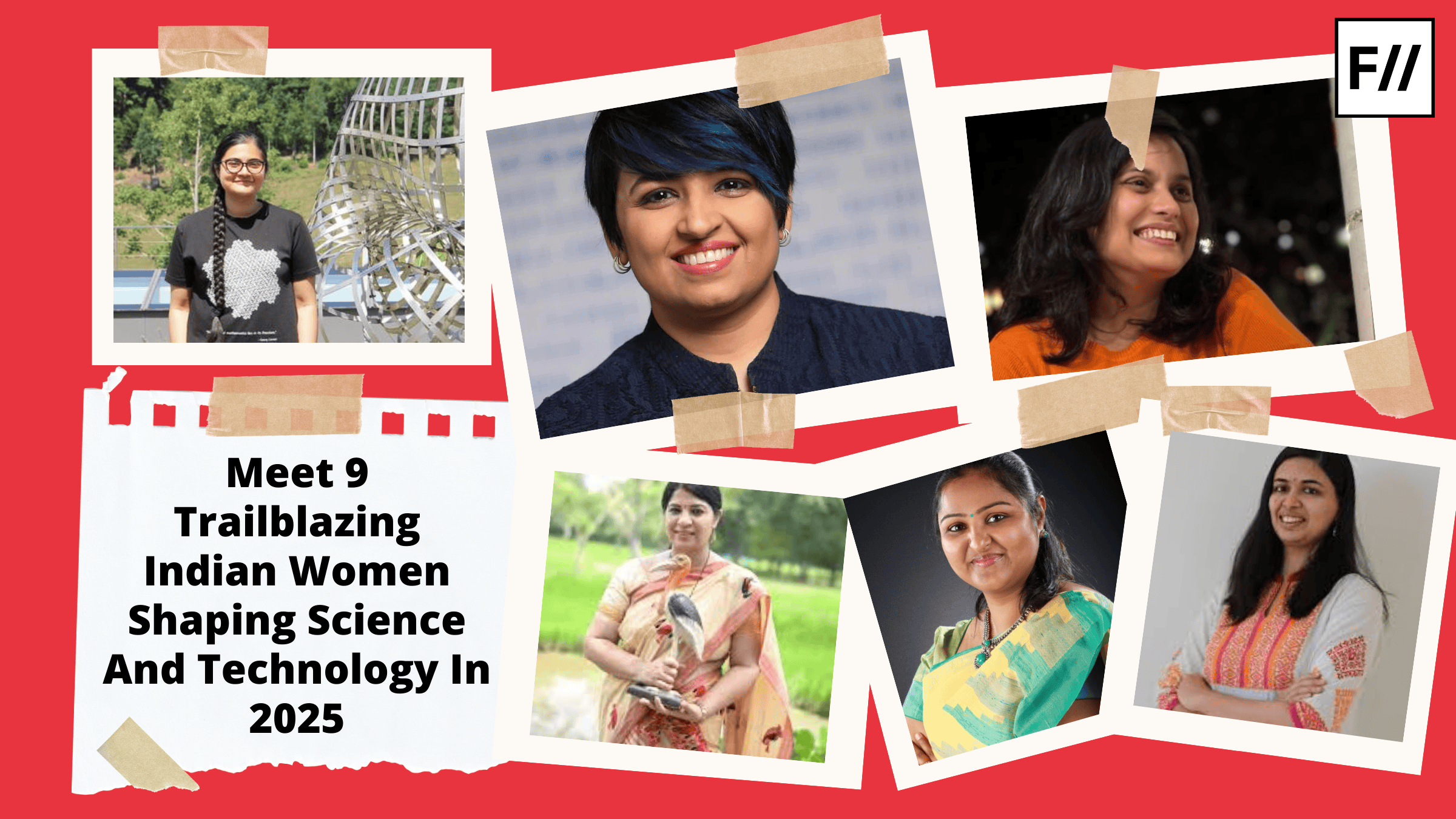
Women have historically been underrepresented in science, technology, engineering and mathematics, yet today the tides have turned and how! Empowered by the increasing workforce participation, upskilling initiatives, mentorship programmes and inclusive workplace policies, women have claimed their rightful space in AI, sciences and other cutting edge fields. India is a growing hub of STEM talent, generating unprecedented opportunities for innovators.
This article celebrates Indian women who are fearlessly breaking barriers and inspiring the next generation. Their work is a powerful reminder that with access and opportunity, women in STEM are shaping the future.
1. Dr Rajula Srivastava
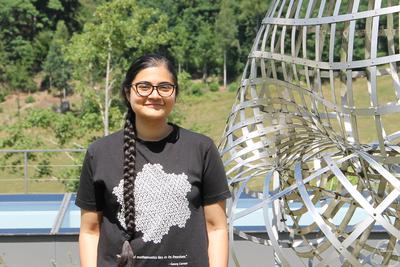
Dr Rajula Srivastava, an Assistant Professor at the University of Wisconsin-Madison, won the 2025 Maryam Mirzakhani New Frontiers in Mathematics Prize, a prize awarded to exceptional Doctoral women mathematicians. It comprises a monetary award of $50,000. She shared her wish to donate part of her prize money to Indian organisations supporting children’s education.
Dr Srivastava served as a Hirzebruch Research Instructor, working across the Mathematical Institute Bonn and the Max Planck Institute for Mathematics (MPIM). Her research sits at the intersection of harmonic analysis and number theory, including notable results on estimating lattice points near smooth surfaces, a subject that has implications for Diophantine approximation in higher dimensions, i.e. the approximation of points with real coordinates by rational points.
2. Dr Divya Karnad
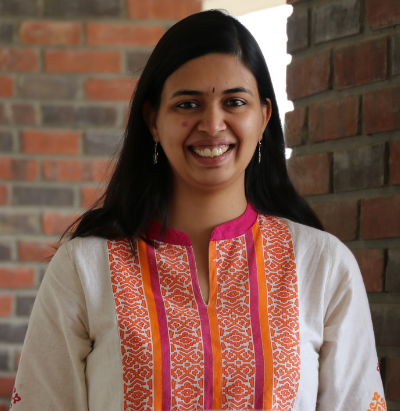
Dr Divya Karnad is a marine conservationist and Associate Professor at Ashoka University, India. She was honoured as the 2025 WINGS Woman of Discovery for her interdisciplinary work in advancing sustainable fisheries, protection of marine biodiversity and community centred conservation. Her work is rooted in the confluence of science, policy and indigenous knowledge to address the human dimension of ocean stewardship. With an extensive record of publications Dr Karnad is an established expert who contributes to public discourses around marine sustainability in India. As the co-founder of InSeason, the nation’s first sustainable seafood initiative, which links small-scale fisheries to reasonable markets, she is helping reduce bycatch and fostering consumer awareness on making ecologically responsible seafood choices.
3. Amrita Krishnamoorthy
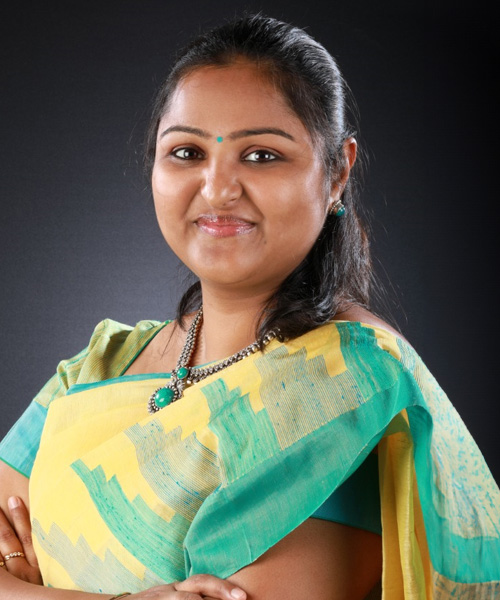
Amrita Krishnamoorthy was honoured with the Unlock Her Future Prize 2025 in the United Kingdom, awarded to innovators leading social change to address South Asia’s most pressing challenges. Her organisation Stepping Stones Center, promotes the practice of Applied Behaviour Analysis (ABA) to support children with Autism Spectrum Disorder and other developmental disabilities. Her evidence-based interventions approach is grounded in the belief that every child is capable of exceeding their potential with the right instructional support. Positing ABA as their scientific foundation, the Centre advances developing communication skills, academic abilities, life skills and reducing challenging behaviours by modifying environmental factors. The team of behaviour analysts and trained practitioners design systematic, bespoke programmes that focus on constructive transformation for children and their families.
4. Jhillika Trisal
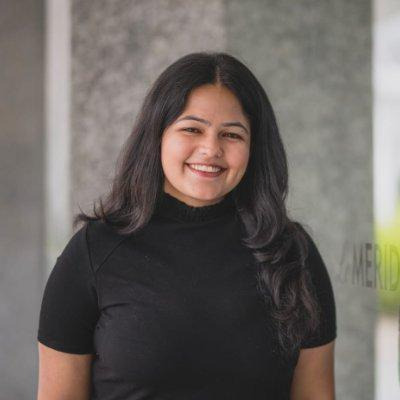
Jhillika Trisal, also a recipient of the Unlock Her Future Prize 2025, has redesigned learning with her startup Cognitii; a mobile first, AI powered ecosystem that supports schools in identifying learning needs early and personalise support for children with development and learning disabilities while mitigating workload on educators. Her platform bolsters data-driven decision making and scalable inclusive education through unifying personal learning, assessments and offers real time progress insights. Built with neurodivergent engineers, educators, and clinical experts, Cognitii hosts AI-powered IEPs, gamified learning, and institution-wide tracking of inclusion. The initiative is providing much needed infrastructure to Indian schools to screen early, support effectively and meaningfully engage neurodivergent learners across education systems.
5. Rashi Jain and Yogesh Wadadekar
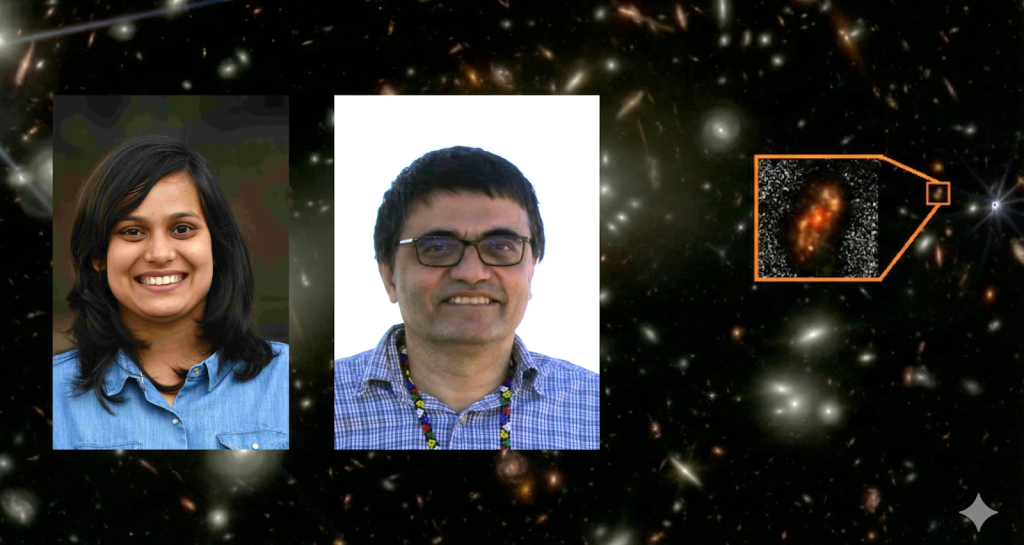
Researchers Rashi Jain and Yogesh Wadadekar from the Tata Institute of Fundamental Research, using NASA’s James Webb Space Telescope (JWST) identified ‘Alaknanda’, a galaxy strongly akin to the Milky Way but which apparently formed when the universe was 1.5 billion years old. Alaknanda, a disk with two well-defined spiral arms and a bright central bulge, contests long standing theories that such structured spirals took billions of years to form. The two astronomers observed JWST images of the galaxy through 21 varied filters to determine Alaknanda’s distance, stellar mass and star-formation rate. This discovery compels astrophysicists to rethink timelines for galaxy formation.
6. Lakshmi Kalyani Chinthala
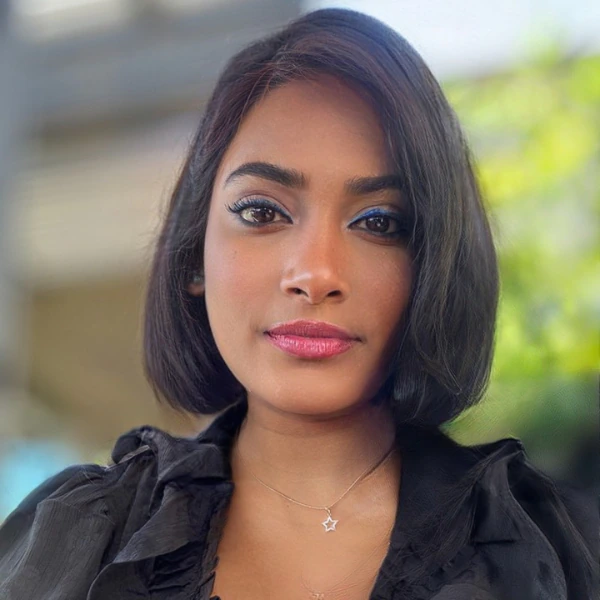
A researcher at Golden Gate University, Chinthala developed Smart DaaS, an AI driven diagnostic solution built around the wearable platform HIVSense Econ. It is a game changing health-tech innovation that merges deep learning and edge-AI biosensing to detect HIV biomarkers such as viral RNA and p24 antigen, accelerating early diagnosis and care especially in under-resourced regions. Providing test results in 30 minutes with a 94.6% accuracy the system combines medical diagnostics with economic modelling. Smart DaaS leverages predictive analysis to identify high-risk cases, optimising treatment and resources while minimising the costs. So far, simulations have shown significant progress in early detection and treatment adherence. Chinthala’s innovation offers a scalable public health tool that has the potential for transforming HIV diagnosis worldwide.
7. Hardika Shah
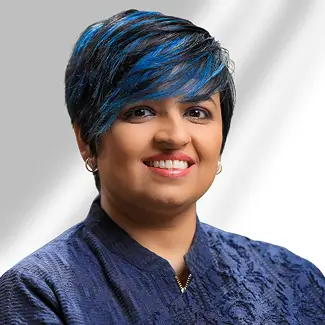
As the Founder and CEO of Kinara Capital, a fintech accelerating financial inclusion for India’s small and medium entrepreneurs, Hardika Shah is bridging the MSME credit gap by providing swift, collateral free loans enabled by digital infrastructure. Through AI/ML powered credit decisioning and the multilingual myKinara app, entrepreneurs are able to complete eligibility checks and loan processing in just 24 hours. Kinara Capital exemplifies gender inclusivity with its women-majority management team and organisational culture rooted in equity. Shah’s initiatives like HerVikas and emphasis on CSR programmes are making tremendous strides towards supporting and empowering women micro entrepreneurs in India, making economic engagement more accessible for marginalised communities.
8. Dr Ruchi Gupta
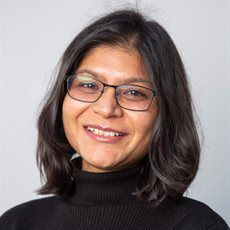
Dr Ruchi Gupta received the 2025 Women in Tech Academic Award and was a finalist of Cancer Research Horizon’s Entrepreneurial Group Leader Award 2025. Dr Gupta is an Associate Professor of Analytical Science at the University of Birmingham and has done groundbreaking research on the development of novel biosensors for application in clinical diagnostics (particularly cancer detection), food security and environmental monitoring. Dr Gupta and her team received a £350,000 grant for their project on developing a hydrogel based lollipop that can more swiftly detect mouth cancer from saliva. This innovation could be a much less invasive alternative to the existing biopsies which require anaesthesia and stitches. It has the potential to help doctors diagnose oral cancer earlier, making treatment more likely to be successful.
9. Dr Purnima Devi Burman
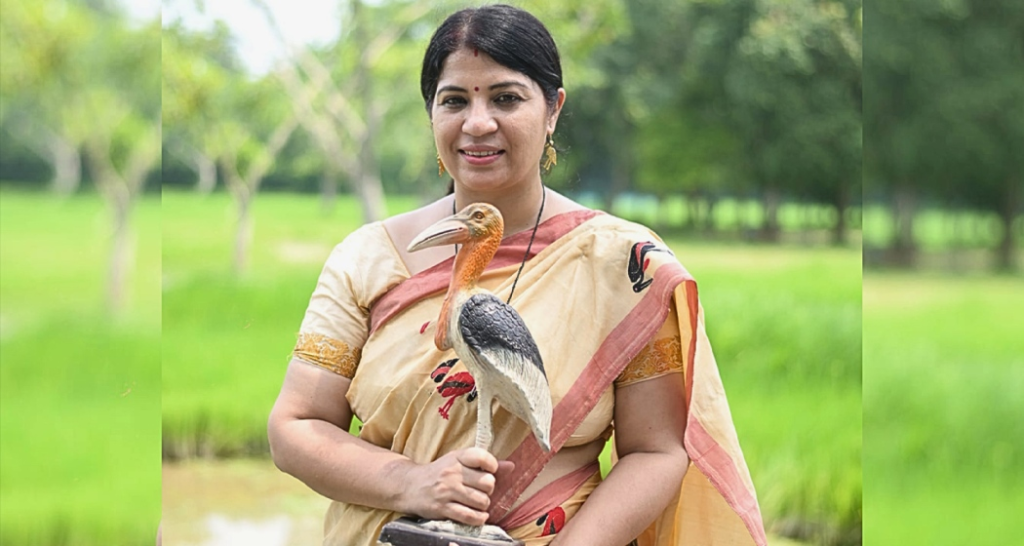
Dr Purnima Devi Barman, a wildlife biologist from Assam was conferred as one of the TIME Magazine’s Women of the Year 2025. Dr Barman has reinvented the landscape of conservation efforts by leveraging grassroots activism and empowering communities to take a stand. As the founder of Hargila Army, she led an all women movement of over 20,000 rural women fighting to protect the endangered Greater Adjunct Stork (Hargila). Her team ensures that nesting habitats are safe, fallen chicks are rescued and the wetland ecosystems are restored. Her endeavours helped usher a rebound in the stork population in Assam – leading to reclassification of Hargila from ‘endangered’ to near ‘threatened’. Her work lies at the intersection of sciences, social equity, cultural mobilisation to protect and preserve the indigenous.
Conclusion
We are living through a significant moment in history where women are making outstanding contributions globally. At the same time we must acknowledge that young girls continue to face multiple barriers in accessing STEM education and the solutions must address these realities. In order to tackle these intersectional challenges we must continue to create inclusive, context specific, localised strategies that are grounded in dismantling gender stereotypes and outdated beliefs systems that were designed to hold women back. Integrating scientific curiosity at the core of education systems, promoting equitable higher participation and opportunities designed for women and girls would ensure more future ready economics and sustainable progress.
This is by no means an exhaustive or representative list. Suggestions to add to this listicle are welcome in the comments section.
About the author(s)

Simran Dhingra is a recent graduate from Geneva Graduate Institute. Her research interests lie at the intersections of gender, peace, and migration. Her work examines how digital infrastructures reproduce power hierarchies, shape vulnerabilities, and influence policy responses at multilateral and institutional levels.



Comments:
Comments are closed.