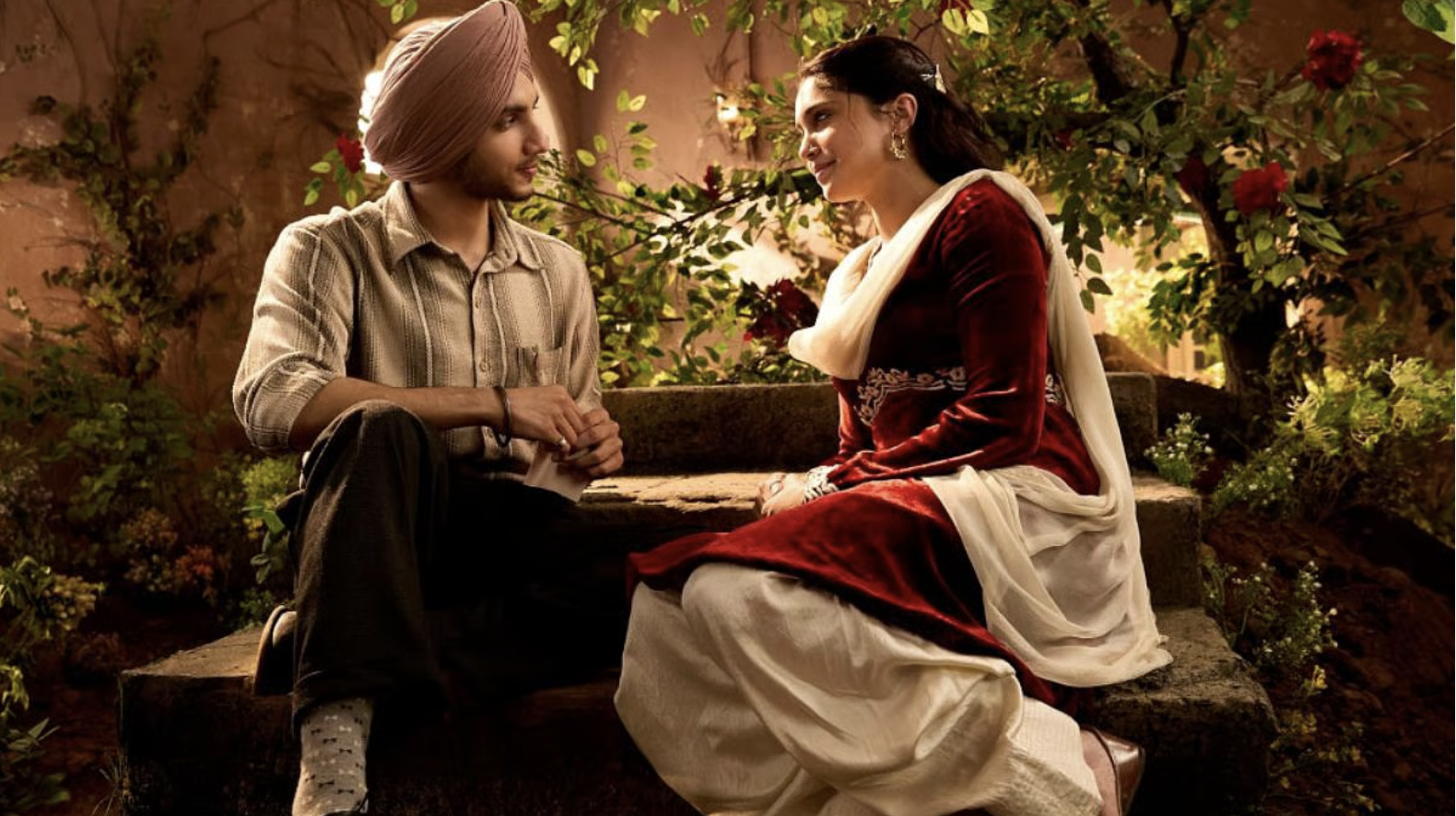
It had been months since I had genuinely looked forward to watching a film in the theatre. Then Main Vaapas Aaunga released, and it was exactly the kind of film I wanted to watch. Directed by Imtiaz Ali, the film revisits one of the most painful chapters of the subcontinent, the Partition of India and Pakistan, through the lens of memory, love, and inherited trauma.
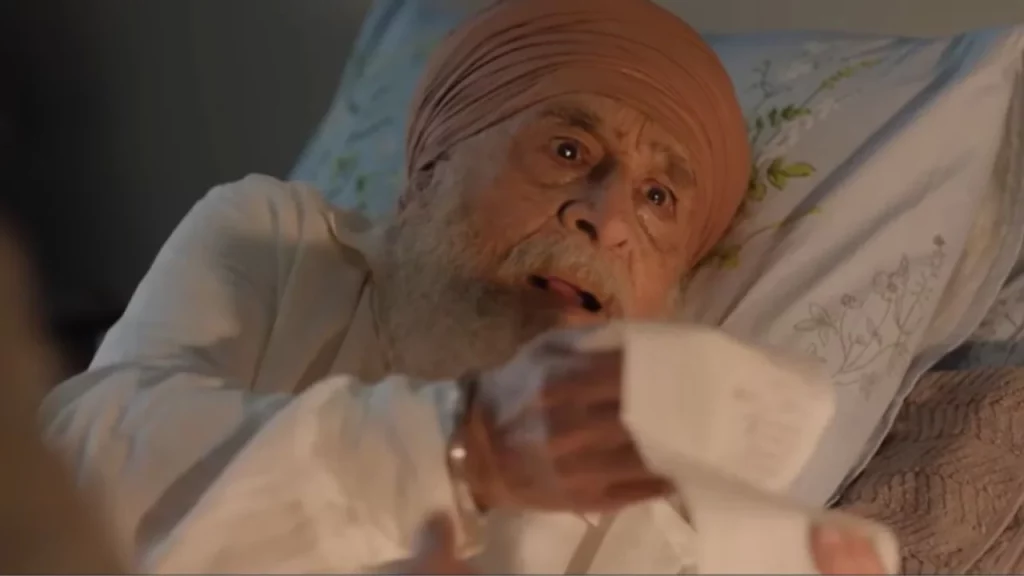
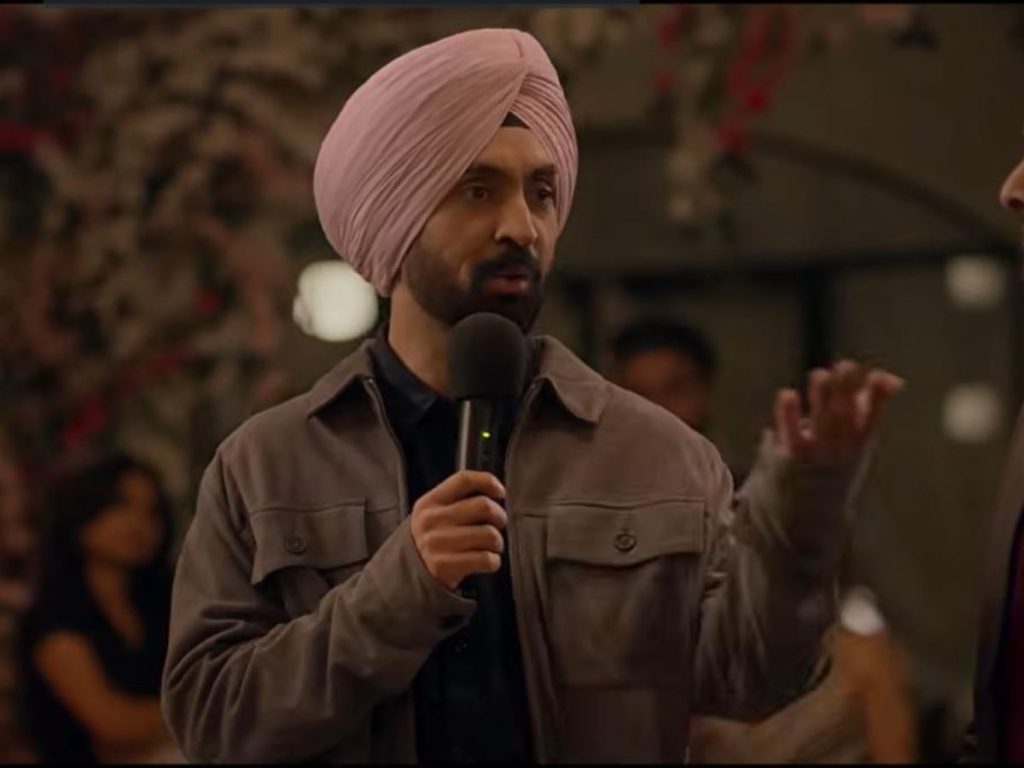
The story centres around Ishar ‘Keenu’ Singh Gerwal (Naseeruddin Shah), an old man with dementia. After suffering a severe stroke, he is visited by his grandson Nirvair (Diljit Dosanjh), an NRI who is the only person Keenu is willing to talk to. As Keenu slips between the present and the past, hazy fragments of his life in Sargodha begin to unfold. His college days, his love for Jiya (Sharvari), and the violence that forced him to abandon his home during the Partition, everything resurfaces. In this grotesque tragedy, what remains with him through decades of displacement is not only memories but also an unfinished poem, poetry he never got to recite to the woman he loved.
Main Vaapas Aaunga is a story of lost love, forced displacement, loss, guilt, and longing. It also attempts to change the narrative surrounding interfaith love at a time when mainstream cinema often reduces such relationships to narratives of coercion and conversion. In a political climate where interfaith love is increasingly interpreted with threat and suspicion, Main Vaapas Aaunga insists on imagining love across religious identities as something ordinary, tender, and worth defending.
In a political climate where interfaith love is increasingly interpreted with threat and suspicion, Main Vaapas Aaunga insists on imagining love across religious identities as something ordinary, tender, and worth defending.
Yet even as the film asks us to reclaim love, its own narratives and imagination of love remain deeply gendered. This contradiction is closely tied to the film’s use of memory. We encounter the Partition not as a historical event but through the fragmented recollections of Keenu. His memories allow the film to move fluidly across time, but they also shape which stories survive. We know Jiya because he remembers her. We go to Sargodha because he returns to the place. While his longing remains vivid across decades, the women who inhabit those memories remain only partially visible. However, the film raises an important question: when history is viewed through a gendered lens, whose lives become worth remembering?
The burden of waiting
Unlike many of Imtiaz Ali’s earlier films, where love is often expressed through emotionally unavailable or self-destructive male protagonists, this film is gentler in its emotional landscape. However, despite its promising premise, the film often feels scattered. The screenplay moves between timelines and emotions without allowing them enough space to breathe. The dialogues lack the intensity needed to convey either the joy of young love or the devastation of irreversible loss.
While the second half has emotional weight as it depicts the horrors of the Partition and communal violence, several narrative threads remain frustratingly unresolved. What becomes of Nirvair’s irrigation machine project? Why is Nirvair’s relationship with his father so strained? How do the men in the family negotiate inherited trauma? These questions are introduced but never meaningfully explored. More significantly, many of these narrative gaps affect the women in the story as well, leaving their lives underdeveloped and reinforcing the limits of the film’s emotional imagination.
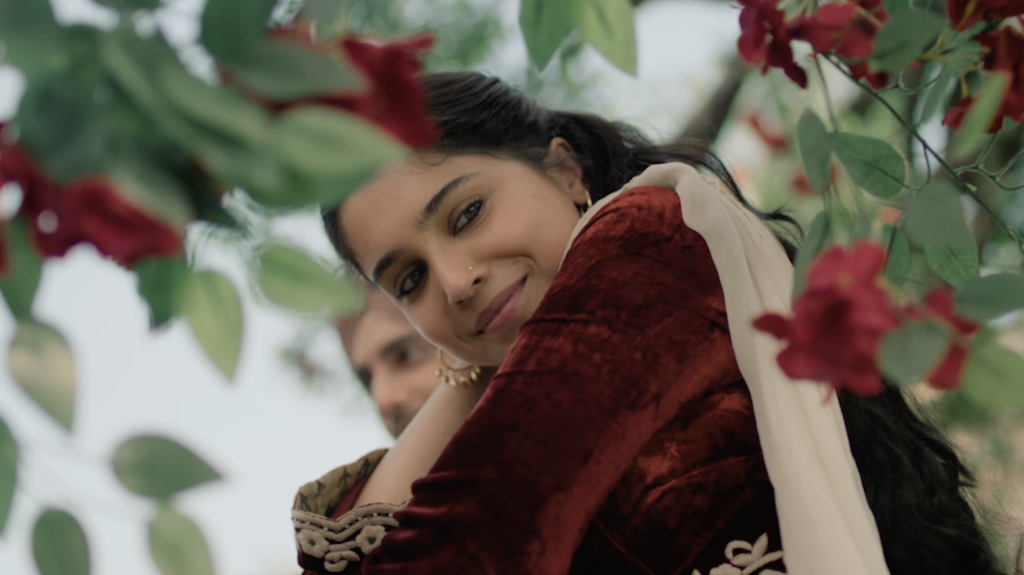
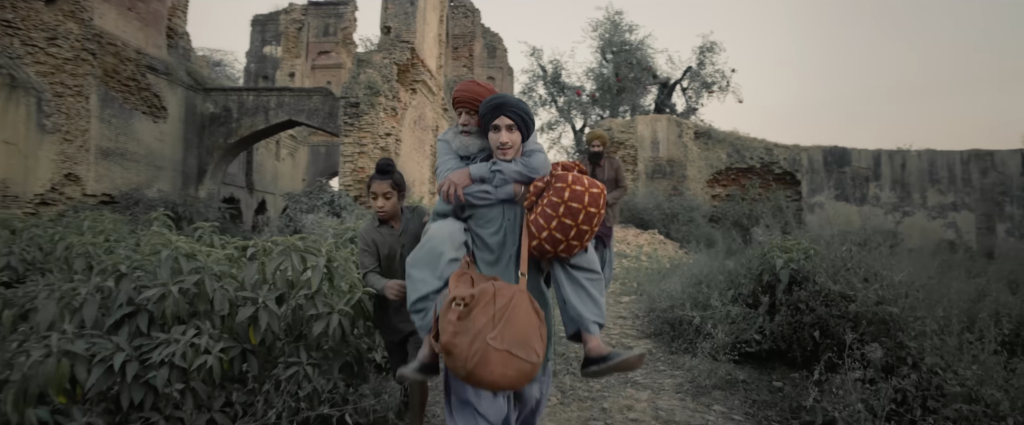
This becomes most evident in Keenu and Jiya’s story. Keenu promises Jiya that he will return, and years later he does. However, he learns that Jiya has married after her family was massacred during the Partition. It was never a matter of choice. Like countless women displaced by violence, her mobility and agency had already been taken away. Keenu’s friend tells him that Jiya continued to wait for him, convinced that he would come back. Yet just as Jiya is being called to meet him, Keenu quietly walks away, telling his younger brother, ‘Don’t turn back. Everything is over.’ When Jiya finally arrives, she finds no one waiting.
The film presents Keenu’s departure as an act of sacrifice, inviting us to mourn the burden of his silence. But it leaves little room to ask what that silence demanded of Jiya. Cinema repeatedly romanticises men who disappear without explanation, only to spend years carrying the guilt of leaving.
The film presents Keenu’s departure as an act of sacrifice, inviting us to mourn the burden of his silence. But it leaves little room to ask what that silence demanded of Jiya. Cinema repeatedly romanticises men who disappear without explanation, only to spend years carrying the guilt of leaving. The emotional burden of waiting, however, almost always belongs to women. Keenu leaves without speaking to Jiya, and yet the film asks us to mourn his pain more than hers. Who, then, accounts for the seventy-eight years stolen from both of them? Love cannot become an excuse for silence. If anything, it demands communication and accountability.
This unresolved love story runs parallel to Nirvair’s relationship with his partner in London. While his partner continues to ask for clarity and commitment, Nirvair remains largely unbothered by the emotional uncertainty he creates by leaving her questions unanswered. Only after witnessing his grandfather’s enduring love does Nirvair finally recognise the need to respond, not merely with commitment, but with the accountability his partner had been asking of him all along.
The film seems to suggest permanence is the ultimate proof of love. It raises an interesting question about modern relationships, where stability, commitment and companionship are constantly being redefined. While the desire to stay together is deeply meaningful, does ‘settling down’ automatically make one accountable? Conversely, does an exploratory or uncertain relationship become an excuse for emotional irresponsibility? I admire old-school romance, but that admiration should not prevent us from questioning the assumptions on which such romances are built.
Women are celebrated for waiting, forgiving. and loving in return—as though love itself were another form of emotional labour specifically assigned to them. Men, meanwhile, are allowed absence. They leave, return, stay silent, and still occupy the emotional centre of these narratives.
Perhaps this indicates a larger problem in the way cinema imagines love itself. Women are celebrated for waiting, forgiving. and loving in return—as though love itself were another form of emotional labour specifically assigned to them. Men, meanwhile, are allowed absence. They leave, return, stay silent, and still occupy the emotional centre of these narratives. I rarely see men portrayed doing the labour of waiting, giving, reflecting, or repairing. That imbalance fundamentally shapes how we comprehend love on screen and otherwise.
Who owns the memories of history?
Reading into the silences of the film reveals how memory itself is selective. Keenu repeatedly speaks of the curse that haunts the women in his family. We get to see his sister, Nirvair’s mother, and many other women whose lives were affected by the Partition. Yet there is no mention of Keenu’s own wife, the woman who built the family whose memories we are asked to go through. She remains invisible, almost erased from the narrative; her presence doesn’t find any space, even as a footnote. Similarly, we never learn what becomes of Nirvair’s partner after he commits to her. These omissions are not incidental or minor. They indicate whose interior lives the film considers worth remembering.
The tragedy is not only that Keenu loses Jiya, but that the film never allows viewers to know her beyond what he remembers. Her story and her ‘self’ are reduced to a metaphor, revealing how easily women are erased even within narratives that seek to remember history.
Jiya’s life post-Partition is almost entirely absent from the film. We know little of her marriage, her grief, her survival, or her choices and negotiations. Instead, she only survives in Keenu’s memory as a smiling woman wearing an earring in one ear, forever waiting for him. Even after her death, her portrait preserves that wait through one lost earring. The tragedy is not only that Keenu loses Jiya, but that the film never allows viewers to know her beyond what he remembers. Her story and her ‘self’ are reduced to a metaphor, revealing how easily women are erased even within narratives that seek to remember history.
Probing into partition histories itself demands multiple perspectives and standpoints. Its violence was experienced differently across different social identities, generations, and genders, yet whose stories continue to occupy the centre of our cultural memory remains an important question.
Probing into partition histories itself demands multiple perspectives and standpoints. Its violence was experienced differently across different social identities, generations, and genders, yet whose stories continue to occupy the centre of our cultural memory remains an important question. Main Vaapas Aaunga invites us to remember the Partition, but it also emphasises how women’s experiences often survive only as extensions of the memories of fathers, grandfathers, and lovers. Whose grief is remembered? Whose trauma is narrated?
Even with these criticisms, Main Vaapas Aaunga remains an important film because it insists on understanding interfaith love not as something dangerous, but as something deeply human. While the film’s scattered and sometimes incoherent plot may not entirely succeed as a cinematic experience, it nevertheless succeeds in posing important questions about memory and love.
By remembering the Partition through the fragmented recollections of its male protagonist, the film also evokes us to think: who gets to be remembered in the first place? While it resists attempts to divide love across religious lines, it continues to imagine that love through a patriarchal and masculine memory. It’s women long, wait, and disappear into mere memory, while the men remain its principal storytellers and narrators. That contradiction invites the viewers to question the gaze of cinema and critically think about whose history cinema continues to preserve, and whose it still leaves behind.
About the author(s)

Sonam Kumari is currently working as an Assistant Editor at Eklavya Foundation, Bhopal. Alongside her editorial work, she writes and researches on higher education, public policy, and literature through an intersectional lens of gender, caste, and class. Words shape her everyday existence, and poetry has become the language through which she survives grief.

What’s more is this is one of the more mainstream portrayals of the partition’s grief that women lived through but it fails to capture women’s grief as their own, the movie makes it a subtext for the story to go forward. I find it a great disrespect by Keenu to those women, to not talk of what actually became of those women, to not acknowledge the atrocities that befell them. The violent scenes were grotesque and that’s how they were intended but were they truly necessary if they weren’t at the forefront. Keenu not waiting until Jiya came mad me question his so called ever lasting love for her.