‘Aage badhne ke liye kabhi kabhi peeche hatna padta hain (To move forward, you sometimes have to take a step back).’
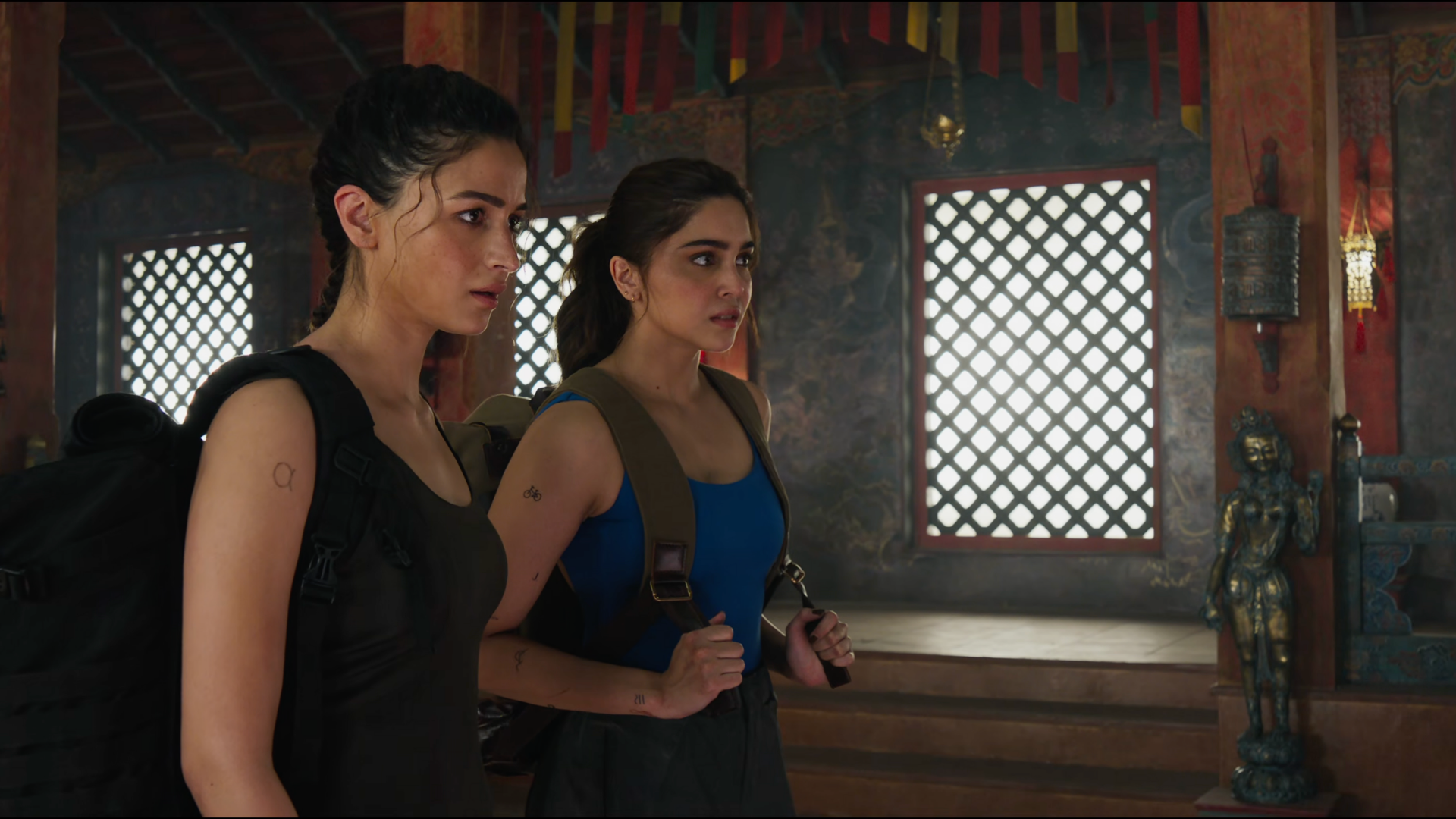
This is what Anil Kapoor tells Alia Bhatt’s Sita and Sharvari Wagh’s Durga in the pre-interval sequence of Yash Raj Films’ (YRF) latest spy action thriller, Alpha.
Ironically, the line describes the film itself. Every time the story seems to move forward and challenge stereotypes, it is pulled back by redundant and lazy writing. There was a lot of anticipation around Alpha ever since it was announced: a big-budget spy thriller headlined by two women, aiming to redefine the femme fatale in Bollywood. However, the release ultimately exposed the industry’s limited understanding of ‘female-led films’ and how to successfully create one.
Who’s the hero: the ‘female-led’ paradox
Despite being marketed as ‘female-led’, Alpha is anchored as much by Bobby Deol and Anil Kapoor as it is by the two leading women. Sure, they get action sequences, solo montages, and hero shots, but the male characters are the real catalysts. While both women are portrayed as deadly fighters, Anil Kapoor is the mentor who directs their next move, Bobby Deol shapes much of the conflict, and Hrithik Roshan ultimately arrives to finish one of the film’s longest showdowns. Meanwhile, Dia Mirza, introduced as a woman of incredible strength and an unbreakable spirit, is written off after a single scene. The burden of representation falls entirely on two women, while the rest of the power structure is dominated by men.
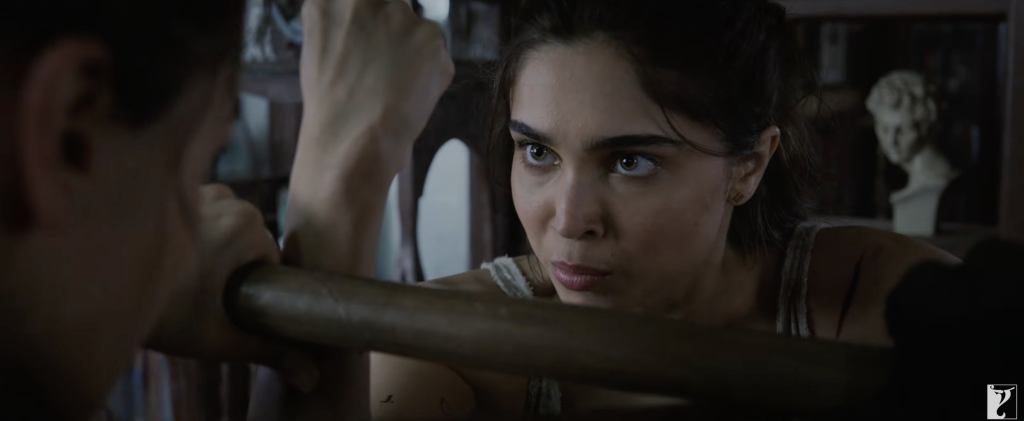
A ‘female-led’ film isn’t simply about featuring women on the poster and having them perform complex stunts. Rather, it is about writing them in a way that puts them at the centre of the narrative and gives them agency over the story’s progression. Leadership, in this case, isn’t measured by screen time alone. It is determined by who drives the plot and whose lives the audience sees in greater depth.
A ‘female-led’ film isn’t simply about featuring women on the poster and having them perform complex stunts. Rather, it is about writing them in a way that puts them at the centre of the narrative and gives them agency over the story’s progression.
Alpha isn’t the first film to struggle with this definition, and it unfortunately won’t be the last. In fact, there is a much larger issue with the way Bollywood writes its women. The previous films in the YRF franchise have repeatedly been criticised for reducing women to eye candy and treating them as mere accessories to men.
Even if you were to replace her character or remove it completely, the man’s journey remains fairly untouched. This is because men not only control the main story but also the world-building around it.
Be that in War or Pathaan, women are glamorous and memorable in flashes, but rarely have a presence of their own. They tend to be defined by romance, sacrifice, or transformation through the male protagonist. The men, however, are given complete identities. They dabble with moral dilemmas and reformation irrespective of the women. Even if you were to replace her character or remove it completely, the man’s journey remains fairly untouched. This is because men not only control the main story but also the world-building around it.
Even in Alpha, the supposed ‘female-led’ film, male characters have immense emotional complexity, while women’s storylines are treated rather frivolously. Bobby Deol’s Fateh Singh Lakhawat is arguably given more narrative weight than Sharvari’s Durga. His past is explored in greater detail, his motivations receive more attention, and his backstory becomes the biggest propeller of the plot.

This kind of writing has a long-lasting impact. Years after these films were released, public conversations revolve around Hrithik Roshan, Salman Khan, Tiger Shroff, Shah Rukh Khan, or John Abraham. The women are mentioned only for a song, an entrance, or a tragic subplot. On the other hand, no flashy dance numbers, sultry outfits, or dramatic storylines are required for the men because they are written as characters with nuance and substance.
The selective forgetfulness or memorability isn’t because Alia Bhatt, Sharvari, or other actresses fail to make an impression. It’s because their characters are reproduced and recycled within the same traditional, overused commercial heroine archetype, which reduces them to unremarkable visual spectacles.
The uneven cost of risk-taking
Over time, these clichés influence the way we talk about risk in Bollywood. During an Actors Roundtable interview, Anupama Chopra asked her guests whether actresses take more risks than actors. Deepika Padukone argued that they do, while Vijay Deverakonda disagreed, asking, ‘How can you say that?‘
For male stars, the risk largely pertains to the role and the extent to which it diverts from their pre-established public persona. This is where the fundamental difference lies. While taking risks is thrilling for men, it is often daunting for women.
For male stars, the risk largely pertains to the role and the extent to which it diverts from their pre-established public persona. For example, Shahid Kapoor was known as the ‘chocolate boy of Bollywood’, and Kabir Singh (2019) changed that completely. He expressed his excitement at the opportunity for change and said that he was willing to experiment with different roles, even if it means facing the possibility of failure.’
This is where the fundamental difference lies. While taking risks is thrilling for men, it is often daunting for women. Vidya Balan was told that a film like The Dirty Picture (2011) would destroy her career because it went against her ‘goody two-shoes‘ image. Similarly, Sonam Kapoor once revealed that multiple male actors rejected Khoobsurat (2014) because they weren’t comfortable with such a feminine title. Yet no one seemed to have any qualms about Sultan, Baazigar, or King.
When Jigra released in 2024, Alia Bhatt’s character was compared to Amitabh Bachchan’s ‘angry young man‘ persona, with a critic noting how ‘her one-note angst is no match for Amitabh Bachchan’s righteous rage’. But if every male character isn’t defined through comparison with a female character, why are women almost always measured against male models? Even when a woman challenges industry norms, she is constantly evaluated in relation to the men who came before her because the discourse surrounding ‘female-led’ films extends beyond the films themselves to the broader cultural context in which they are produced.
For women actors, the question of risk is much more complicated. Will audiences accept a film led by women? If it underperforms, will another woman be trusted with a similar project? Will the burden of failure fall entirely on them?
Therefore, for women actors, the question of risk is much more complicated. Will audiences accept a film led by women? If it underperforms, will another woman be trusted with a similar project? Will the burden of failure fall entirely on them? Male actors can have multiple commercial failures and still be entrusted with grand projects. Women actors, meanwhile, have to justify their place with every release.
The issue is that the tag ‘female-led’ is antithetical to its purpose. We applaud women for shattering the glass ceiling and entering spaces men have long occupied, but these spaces are never rewritten for them. As a result, instead of creating a unique identity, they mould themselves to preexisting templates of heroism, most of which have been shaped for and by men, and this is then characterised as ‘female-led’.

Films like Piku, Queen, English Vinglish, and Gangubai Kathiawadi prove that Bollywood is capable of crafting stories that centre on women’s lives. Interestingly, none of them proclaims they are ‘female-led’. They simply tell honest stories of multifaceted women and their realities.
Bollywood will only truly move forward when the tag is no longer treated as a headline or a marketing strategy, but as a fact. When women actors leading blockbusters aren’t viewed as industry experiments, and their characters receive the same care that male protagonists do. Until then, the phrase will hardly change anything for women, but it will continue to reveal who Bollywood still imagines as its default hero.
About the author(s)

Suditi Sundaram is a passionate writer who has a habit of questioning just about everything in life, especially through a feminist lens. Most of her article ideas come from this curiosity. Outside of writing, she can be found reading fantasy novels or baking some kind of chocolate dessert.